 How-to
How Machine Learning Improves Nutrition Tracking
Table of Contents
- Why Manual Food Logging Breaks Down for Most People
- How Machine Learning Recognizes Food and Estimates Portions
- Personalized Nutrition: What Machine Learning Adds Beyond Calorie Counts
- How Accurate Is AI Nutrition Tracking, Really?
- Privacy, Bias, and Human Oversight to Consider
- Choosing an AI Nutrition Tracking App and Getting Started
- Trying Dialed In for Your Next Restaurant Meal
- Frequently Asked Questions
Last Updated: October 30, 2026
Why Manual Food Logging Breaks Down for Most People
Most people start strong, logging every bite for a week, then quietly stop. Manual tracking asks for too much effort, too often.
Logging one meal can take several minutes: searching a database, picking the right entry, guessing the portion. Over time, that friction wins.
Accuracy is the bigger problem.
Manual logging also pushes people toward restrictive dieting. When every bite must be recorded, many start skipping meals or avoiding foods they cannot easily measure.
- Logging takes time, and busy days get skipped first
- Portion guesses often run low or high
- Database entries may not match a home-cooked or restaurant meal
How Machine Learning Recognizes Food and Estimates Portions
Machine learning is a branch of artificial intelligence that learns patterns from large sets of examples.
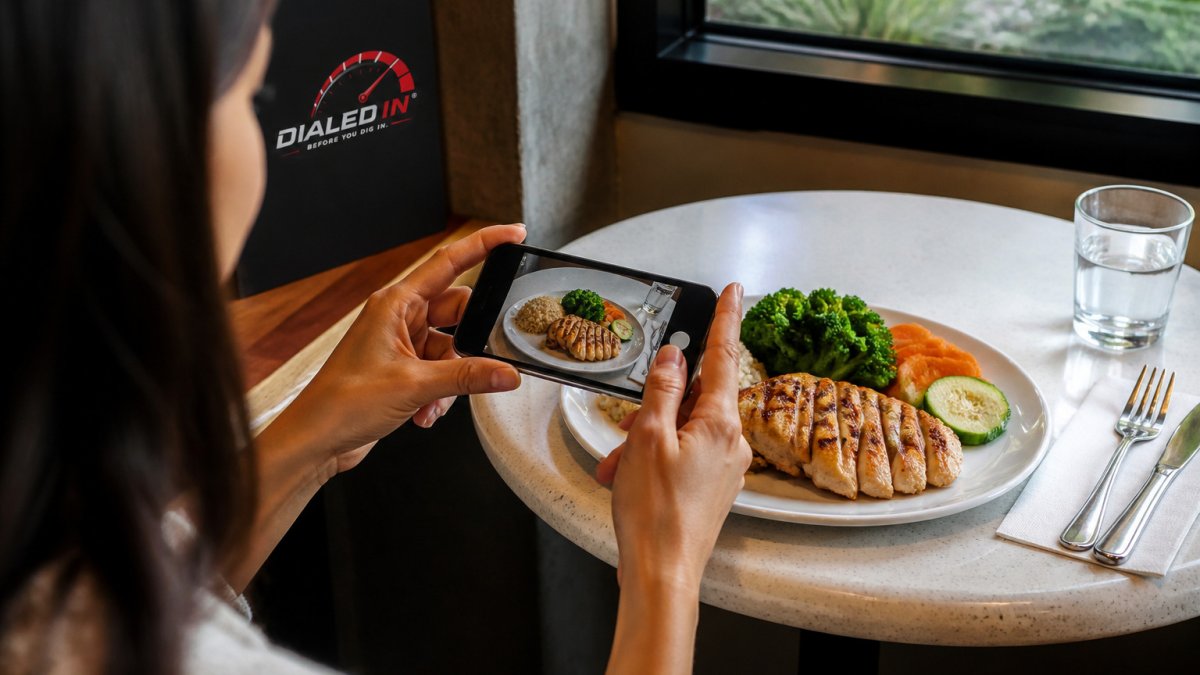
A typical system is trained on thousands of labeled food images, learning to tell grilled chicken from roasted pork or brown rice from quinoa, then applies that to new photos.
Portion estimation works similarly: the model looks at the visible area of each food, compares it with typical serving patterns, and produces an estimated amount.
From Meal Photo to Calorie and Macro Estimate
The process usually follows a few simple steps:
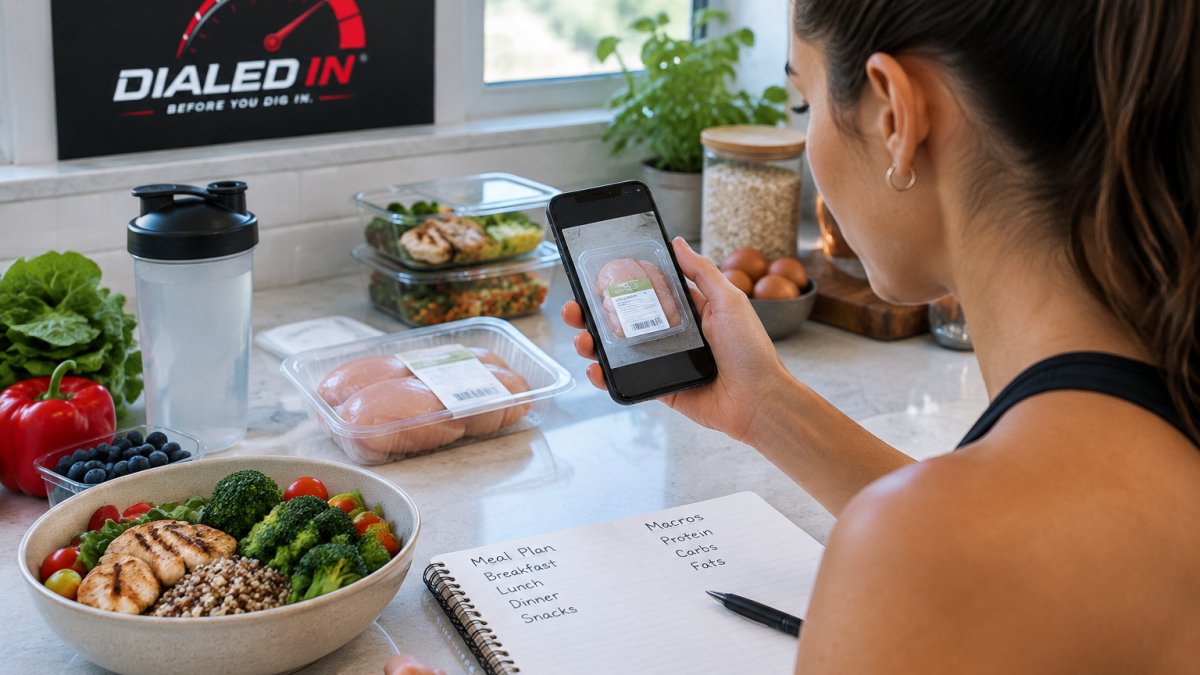
- The user takes a photo of the meal
- The model identifies each food item on the plate
- It estimates the portion size for each item
- It matches each item to nutrition data to estimate calories and macros
The final output is an estimate, not a lab result. Still, it can remove most of the manual typing that makes tracking hard to keep up.
Where Wearable and Activity Data Fit In
Activity data does not replace food recognition; it adds context. A long run may call for a different calorie target than a rest day, and the app can adjust its advice.
Personalized Nutrition: What Machine Learning Adds Beyond Calorie Counts
Calorie counting tells a person how much they ate. Personalized nutrition asks what they should eat next, given their goals.
Machine learning can learn patterns in a person's eating habits over time and suggest options that fit their goals.
A user building muscle may need more protein per meal; a user focused on weight loss may need fewer calories without giving up satisfying portions.
How Accurate Is AI Nutrition Tracking, Really?
AI nutrition tracking is useful, but it is not a measurement instrument. Accuracy depends on what you measure, how the food was prepared, and what you compare against. For a dedicated guide to how accurate AI food scanners are, see the full breakdown by food type and context. Treat every number as an estimate with a range.
What "Accuracy" Actually Means
Accuracy gets used loosely, so separate three different things:
- Model performance, how often the system correctly identifies a food in a labeled test set. This is a lab number on curated images and does not tell you how the app performs on your dinner.
- Estimation error, how far predicted calories or macros land from a reference value for a single meal. Even a well-identified food can carry a large portion-size error.
- Real-world tracking accuracy, how close your logged intake comes to what you actually ate over days or weeks. This matters for goals and is the hardest to measure.
A model can score well on the first and still disappoint on the third. When an app advertises an accuracy figure, ask which one it means and on what data it was measured.
Why Portion Size Drives Most of the Error
Food recognition and portion estimation fail differently. Identification is often the easier problem; portion size is where estimates drift. For a deeper explanation of how AI food scanner accuracy works, see how it varies across foods.
- Visible area is not weight. A model sees the footprint of food on a plate, not its density. A shallow pile of pasta and a tall mound can look similar from above but differ substantially in calories.
- Hidden fats and sauces. Oils, butter, dressings, and fillings add calories the camera cannot see. A grilled chicken breast and one finished in butter can look nearly identical.
- Mixed dishes collapse many ingredients into one guess. Casseroles, curries, soups, and stir-fries hide their components, so the model estimates a composite rather than summing known parts.
Accuracy by Food Type and Context
- Whole, separated foods, grilled meat with vegetables, a piece of fruit, a plain yogurt, tend to produce the tightest estimates because the items are distinct and familiar.
- Mixed dishes, casseroles, and soups are harder because ingredients overlap and portions are hard to separate visually.
- Restaurant meals vary widely in oil, butter, and portion size, and the same dish name can mean very different plates across kitchens.
How to Verify an Estimate
You do not need a lab to sanity-check an app. A simple routine catches most large errors:
- Weigh a few meals. A kitchen scale is the cheapest accuracy upgrade available. Weigh the components of two or three typical meals, log them manually, and compare with the app's photo estimate. The gap tells you how far off the model tends to run for your food.
- Check against labels. For packaged foods, compare the app's entry with the nutrition facts panel. If they disagree, trust the label and correct the entry.
- Use a trusted reference database for whole foods. Compare the app's calorie and macro figures for basic ingredients against a well-known reference database to catch obvious mismatches.
- Watch for systematic bias. If the app consistently runs low on restaurant meals, adjust your expectations for those meals rather than assuming every entry is wrong.
- Track trends, not single meals. Day-to-day estimates are noisy. Averages over a week or two are far more stable and more useful for adjusting habits.
What Accuracy Is Good Enough
For most people, the goal is not a precise calorie count but a consistent, directionally correct picture of intake. If estimates show whether you are trending toward your target, they are doing their job.
The article separates three kinds of accuracy and lists the factors that most often push estimates off, so the table below summarises the main sources of error.
| Source of error | Why it matters | Fix |
|---|---|---|
| Visible area is not weight | Shallow and tall piles can look alike but differ in calories | Weigh a few meals to calibrate |
| Hidden fats and sauces | Oil, butter and dressings are not visible in the photo | Ask about or add cooking fats |
| Mixed dishes | Ingredients blend into one composite guess | Check the components against known recipes |
| Preparation method | Fried versus baked changes calories without changing shape | Note how the food was cooked |
| Missing reference object | Without a known scale, absolute size is a guess | Use a plate, hand or coin for scale |
| Restaurant meals | Oil, butter and portions vary widely by kitchen | Expect wider ranges for restaurant food |
Privacy, Bias, and Human Oversight to Consider
Food photos, wearable streams, and health goals are sensitive data. Read a focused explanation of how AI food tracking privacy works before you upload anything. Before committing to any AI tracker, treat privacy, bias, and oversight as part of the product, not an afterthought.
Privacy: What to Check Before You Upload a Meal Photo
A meal photo can reveal your location, your home, and your habits over time. A few concrete checks go a long way:
- Read the privacy policy for data use, not just data collection. Look for whether images are used to train models, whether they are shared with third parties, and whether you can opt out of training use.
- Find the deletion path. A reputable app lets you delete individual entries and your account, and explains how long backups persist after deletion.
- Check retention windows. Some services keep images indefinitely; others delete them after processing. The difference matters if you photograph meals at home.
Bias: Why Some Foods Get Recognized Better Than Others
Machine learning models learn from their training examples. If the data skews toward certain cuisines, packaging, or plating styles, recognition will be uneven, not from malice, but because the model has seen more of some foods than others.
In practice, bias shows up as:
- Uneven cuisine coverage. Dishes common in one region or culture may be misidentified or forced into the closest familiar match, which distorts the calorie and macro estimate.
- Packaged versus homemade assumptions. Models trained heavily on branded products may struggle with home-cooked versions of the same dish.
- Plating and lighting effects. Foods photographed in unusual lighting, on dark plates, or in stacked or shared serving styles are harder to read than a single plated meal under bright light.
You cannot fix a model's training data, but you can correct its output. When a food is misidentified, edit the match and portion rather than accepting the guess; over time, your corrections improve your log and signal where the app falls short.
Human Oversight: When an App Is Not Enough
Automated suggestions are useful for everyday choices. They are not a substitute for clinical care, and there are clear situations where a professional should be involved:
- Medical conditions that affect diet, diabetes, kidney disease, food allergies, and gastrointestinal conditions all require guidance an app cannot safely provide.
- Eating disorders or a history of disordered eating, detailed tracking can reinforce restrictive patterns. A clinician or registered dietitian should guide whether and how tracking is used.
- Pregnancy, lactation, and childhood nutrition, energy and nutrient needs change substantially, and generic targets can be wrong.
A registered dietitian is the appropriate professional for most nutrition questions, and a physician should be involved when a medical condition is in play. Use AI tracking to bring better data to those conversations, not to replace them.
Choosing an AI Nutrition Tracking App and Getting Started
When picking an app, look for clear accuracy information, transparent privacy practices, and easy ways to correct mistakes.
Start small. Consistency matters more than perfect numbers.
Some readers will want a tool that gives personalized food guidance without a heavy logging routine.
Trying Dialed In for Your Next Restaurant Meal
Restaurant meals are one of the hardest places to hit nutrition goals. Portions are large, sauces are heavy, and menus rarely list full nutrition details.
Dialed In is a real-time AI food decision coach. Point the camera at a menu, plate, or refrigerator item and get recommendations aimed at goals like losing fat, building muscle, or maintaining weight.
Readers who want to see how it works can visit the Dialed In website.
Frequently Asked Questions
How does machine learning work in nutrition tracking?
Machine learning models are trained on large sets of labeled food images and nutrition records. Photographed meals can be analyzed by such models to identify foods and estimate portion size from visual cues. The model improves as it sees more examples, which is why food recognition tends to get better with broader training data. Results still depend on image quality and how closely the dish resembles what the model has learned.
How accurate are AI-powered nutrition tracking apps?
Accuracy varies by food type, portion complexity, and how the meal is photographed. Simple, single-ingredient foods with clear edges are usually estimated more reliably than mixed dishes with hidden oils, sauces, or fillings. Published accuracy claims should be checked against independent testing, and portion estimates are typically the largest source of error. Treat AI estimates as a useful approximation for decisions, not a lab-grade measurement.
Can AI identify foods and estimate portion sizes from a photo?
Yes, most current tools can identify common foods and estimate portions from a single photo, but confidence drops with mixed or obscured dishes. Restaurant meals are harder because sauces, cooking fats, and ingredients are often not visible. Taking the photo from a consistent angle with good lighting and a reference object, such as a utensil or hand, helps the estimate.
Can AI nutrition apps track meals without manual logging?
Many AI apps reduce manual logging to a photo or a quick confirmation, which removes most of the typing and searching that drives people to abandon traditional trackers.