 How-to
How to Eat Out While Counting Calories Without the Guesswork
Last Updated: November 21, 2026
Quick Summary
To eat out while counting calories, estimate the big components of your meal, apply a range, and move on rather than chasing precision. Split the plate into protein, starch, vegetables, and fats or sauces, estimate each part, and log the order as you place it instead of afterward.
- Spend about five minutes before the meal checking the online menu and picking two candidate dishes.
- Treat printed restaurant nutrition data as a starting point, since portion drift and added fats shift the real number.
- Use your hand as a reference: a palm of protein is roughly 3 to 4 ounces and a cupped hand holds about half a cup.
- Ask for sauces and dressings on the side and count them as a separate line item, never folded into the dish.
- For shared plates, estimate each dish as a full portion, divide by the number of diners, then add a small buffer.
Table of Contents
- How to Track Calories When Eating Out Without Slowing Down Your Meal
- How Do Restaurants Calculate Calories, and How Close Are Those Numbers?
- Where to Find Calories in Restaurant Food Before You Sit Down
- How to Work Out Calories in Takeaway and Delivery Orders
- Breaking a Restaurant Meal Into Components to Estimate Calories
- Sauces, Dressings, and Toppings: The Calories Hiding in Plain Sight
- Handling Shared Plates, Custom Orders, and Meals That Blow the Budget
- Order With Confidence Before You Walk In
- Frequently Asked Questions
How to Track Calories When Eating Out Without Slowing Down Your Meal
Counting calories at a restaurant doesn't require a food scale or a 20-minute math session at the table. A workable approach takes about five minutes before the meal and a few taps during it.
The core idea is simple. Estimate the big components, apply a range, and move on. Precision matters less than consistency when counting calories over a week.
Build a Five-Minute Pre-Meal Routine
Before leaving home or the office, do three things:
- Open the restaurant's online menu and pick two candidate dishes
- Note the protein, starch, and vegetable in each
- Decide the rough calorie band you're willing to spend
This turns the menu into a decision, not a quiz. A common mistake is arriving hungry with no plan. Hunger pushes people toward fried appetizers and oversized sides, and the calorie deficit disappears before the entrée lands.
Log While You Order, Not After
Log the meal as you order it, not an hour later. Memory fades fast, and portion details blur once plates are cleared.
- Enter the dish name and a rough portion while the server takes the order
- Add sauces and sides in the same entry
- Skip the second pass; one entry per meal is enough
For a faster path, track restaurant nutrition without manual logging so the estimate happens as you order rather than after dessert.
How Do Restaurants Calculate Calories, and How Close Are Those Numbers?
Restaurant calorie figures are estimates built from standardized recipes, ingredient weights, and lab analysis of sample dishes. They are not measurements of the plate in front of you.
Three things move the real number away from the printed one:
- Portion drift. Line cooks portion by eye, so servings vary between visits.
- Added fats. Butter, oil, and finishing sauces often go unmeasured.
- Custom swaps. Extra cheese, no sauce, or a double protein changes everything.
Treat printed nutrition information as a starting point, not a verdict. The FDA oversees menu labeling rules for chains with 20 or more locations, which is why national chains publish numbers and independent restaurants usually don't.
Where to Find Calories in Restaurant Food Before You Sit Down
Calories in restaurant food are easiest to find before arrival. Most chains post nutrition data online, and many independent restaurants list ingredients even when they skip numbers.
Reading Menu Nutrition Panels and Online Menus
Look for three columns: calories, protein, and fat. Protein is the most useful number for anyone building muscle or managing hunger.
Watch the serving basis. A menu panel may list calories per half portion while the kitchen serves the full one. Scan for "per serving" versus "per item" before trusting the figure.
When No Nutrition Information Exists
Independent restaurants often publish nothing. In that case, estimate from the dish description.
- Identify the protein and its cooking method
- Note the starch and its likely portion
- Count visible fats: oil, butter, cheese, cream
A grilled chicken breast with rice and vegetables lands in a very different band than the same chicken fried with a cream sauce. The description usually tells you which one you're getting.
How to Work Out Calories in Takeaway and Delivery Orders
Takeaway and delivery orders are easier to estimate than sit-down meals because you control the assembly. The catch is that takeout portions often run larger than dine-in servings.
A simple method:
- Unpack the order and look at the actual portion
- Separate sauces and dressings into their own containers
- Estimate the protein, starch, and vegetables by volume
- Add sauces by the spoonful, not the drizzle
Delivery apps increasingly show nutrition data for chain restaurants. Use it when it's there. When it isn't, the component method below does the work.
Breaking a Restaurant Meal Into Components to Estimate Calories
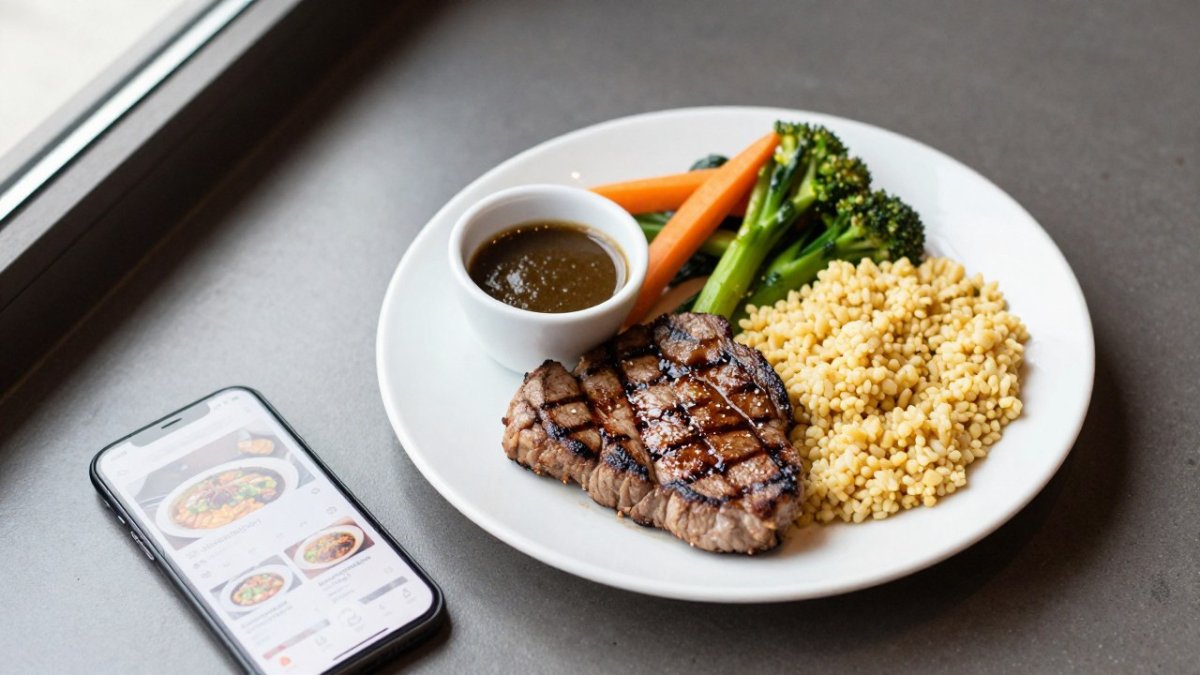
Every restaurant meal is a stack of components, and each one can be estimated separately.
Split the plate into four parts:
- Protein: meat, fish, eggs, beans, tofu
- Starch: rice, bread, pasta, potatoes, tortillas
- Vegetables: greens, roasted veg, salads without dressing
Estimate each part, then add them. For a deeper walkthrough of this method, see how to estimate restaurant calories.
Worked Examples Across Common Cuisines
General advice is hard to apply until you see it on a real plate.
Sushi rolls. A standard roll is mostly rice and nori, with the filling determining the rest.
Pizza. Estimate by the slice and by the topping load.
Mixed platters and combo plates. These are the hardest because the kitchen decides the proportions.
Recording an Uncertainty Range Instead of a Single Number
Restaurant estimates are not measurements, and pretending otherwise creates false precision that makes a week of tracking look more accurate than it is.
A simple convention: if you are confident in the components, use a narrow range; if the dish is fried, sauce-heavy, or from an independent kitchen with no published data, widen the range.
Estimating Portion Sizes Without a Scale
Use your hand as the reference. A palm-sized portion of protein is roughly 3 to 4 ounces. A cupped hand holds about half a cup of rice or pasta.
Restaurant portions usually run larger than home servings, so a useful starting assumption is that the protein is a palm and a half and the starch is a full cup unless the menu says otherwise.
Accounting for Cooking Methods, Oils, and Added Fats
Cooking method changes the calorie estimate more than most people expect. Grilled, steamed, and baked dishes carry less added fat than fried or sautéed ones.
- Fried: add a meaningful fat allowance on top of the base estimate
- Sautéed: assume a tablespoon or two of oil
- Grilled or steamed: minimal added fat
A common mistake is estimating the protein and forgetting the oil it cooked in.
The component method splits any plate into four parts, and these worked examples show how it lands on real dishes.
| Dish | What to estimate | Typical calorie band |
|---|---|---|
| Chicken curry with rice | Chicken, full cup rice, sauce as separate fat line | 650-850 calories |
| Sushi rolls, two-roll order | Per piece; fillings and sauces decide the rest | 600-900 calories |
| Pizza | By the slice and topping load; crust, cheese, meats separately | Varies by slice and toppings |
| Mixed platters and combo plates | Each visible mound separately, plus a buffer | Hardest to estimate |
Sauces, Dressings, and Toppings: The Calories Hiding in Plain Sight
Sauces and dressings are the most undercounted part of any restaurant meal. They arrive in small vessels, so they feel minor, but a creamy dressing or a butter-based sauce can rival the entrée.
Ask for sauces and dressings on the side. Then use them by the spoonful rather than letting the kitchen pour.
A practical rule: count sauces as a separate line item, never fold them into the dish estimate.
Handling Shared Plates, Custom Orders, and Meals That Blow the Budget
Shared plates and custom orders break the normal estimation flow, so handle them with a repeatable method rather than guessing at the end. This is the situation most guides skip, and it is where tracking usually falls apart.
A Step-by-Step Method for Shared and Family-Style Meals
- Note the number of dishes on the table and the number of people eating.
- Estimate each dish as if it were a full portion, using the component method.
- Divide your share by the number of people, then add a small buffer for the bites that don't get counted.
- Log one entry for the meal rather than trying to reconstruct every bite later.
For family-style meals where dishes arrive in waves, estimate the total spread once and divide by the number of diners. If you ate noticeably more of one dish, adjust that dish's share upward rather than re-estimating everything.
Custom Orders and Substitutions
For custom orders, estimate the swap, not the whole dish. Adding cheese, swapping a side salad for fries, or doubling the protein each changes the total by a predictable amount.
Watch out: a substitution that sounds lighter, a side salad instead of fries, can carry more calories once a creamy dressing is poured over it. Count the dressing separately.
When a Meal Exceeds the Planned Budget
When a meal exceeds the planned calorie budget, don't write off the day and don't try to compensate with restriction or extra exercise. Log the real estimate, then return to your normal pattern at the next meal.
A practical recovery sequence: log the meal honestly, drink water, eat a normal breakfast the next day, and let the weekly average absorb the variance. For tactics that keep a splurge from turning into a binge, see stop overeating at restaurants.
A Reusable Restaurant Logging Checklist
Turn the scattered tips into a repeatable process you can run for dine-in, takeout, and delivery:
- Checked the online menu and nutrition panel if available
- Picked a protein, starch, and vegetable in advance
- Decided to ask for sauces and dressings on the side
For concrete dish picks that fit common goals, what to order at a restaurant to lose weight covers the specifics. And for anyone who wants the logging step handled automatically, an AI calorie counter for restaurants walks through the faster workflow.
Order With Confidence Before You Walk In
The best calorie estimate is the one made before ordering. Walk in with a plan, and the menu becomes a set of known options instead of a trap.
A quick checklist to reuse every time:
- Checked the online menu and nutrition panel if available
- Picked a protein, starch, and vegetable in advance
- Decided to ask for sauces and dressings on the side
For concrete dish picks that fit common goals, what to order at a restaurant to lose weight covers the specifics.
Counting calories while eating out fails when the process gets complicated.
Frequently Asked Questions
How do you estimate calories in a restaurant meal when the portion size is unknown?
Use familiar reference objects to judge the portion: a deck of cards for a palm-sized protein, a closed fist for a cup of rice or pasta, a thumb for a tablespoon of oil or dressing. Then break the dish into components and estimate each one separately. Add a buffer of roughly 10 to 20 percent to cover hidden fats and larger-than-expected restaurant portions. Log the estimate and move on. Precision matters less than consistency across the week.
Is it okay to enjoy a higher-calorie meal while counting calories?
Yes. One meal does not undo a week of consistent tracking. A single large dinner shifts your weekly average far less than skipping tracking entirely. Plan for it by keeping earlier meals lighter in fat and heavier in protein and vegetables, and by checking the menu before you arrive so the choice is deliberate. Get back to your normal routine at the next meal rather than trying to compensate with severe restriction the following day.
How accurate are the calorie counts restaurants publish?
Published numbers are useful starting points, not exact measurements. Restaurant food is portioned by hand, so the same dish can vary by a meaningful margin from visit to visit, and cooking fats are often eyeballed. Treat menu figures as a baseline, then add a small buffer for sauces and preparation variance. For dishes without published data, estimate from components and record a range rather than a single number.
What should I order at a restaurant when trying to lose weight?
Lead with a grilled or roasted protein, add vegetables, and choose one starch portion rather than two. Ask for sauces and dressings on the side so you control the amount. Order water alongside your meal. These choices cut calories without requiring a special menu, and they work at nearly any cuisine. If you use a decision app, scan the menu before ordering to see which options align with your calorie deficit or protein target.