 How-to
How to Balance Macros Without Counting Calories
Table of Contents
- Why Balancing Macros Without Counting Calories Works
- The Hand Portion Guide for Macros: Your No-Scale Measuring Tool
- How to Get Enough Protein Without Tracking Macros
- Balanced Meal Examples Without Counting Calories
- Macro-Friendly Meal Planning for Busy Weeks
- How to Adjust Portions for Your Body, Activity Level, and Goals
- How to Track Progress Without Turning It Into Tracking
- Conclusion
- Frequently Asked Questions
Last Updated: October 17, 2026
Why Balancing Macros Without Counting Calories Works
Learning how to balance macros without counting calories starts with one shift: build meals by sight and feel instead of by numbers.
Calories and macros are not the same thing. Calories measure total energy. Macros are the three building blocks that supply it: protein, carbohydrates, and fat. A meal can hit a calorie target and still leave a person hungry an hour later if the protein is low.
Balancing macros means giving each plate a reasonable share of protein, carbs, and fat, plus fiber from vegetables. No app required to start.
Calories vs. Macros: What Actually Matters
Total intake still drives weight change. But the mix of macros drives how a person feels between meals. Protein and fiber support fullness, steady energy, and muscle retention. Fat carries flavor and slows digestion. Carbs fuel training and daily focus.
Most people who abandon calorie counting do so because the logging becomes a second job. The fix is not more discipline. It is a simpler decision rule they can repeat without a spreadsheet.
Who This Approach Suits (and Who It Doesn't)
This method fits busy professionals, frequent diners, athletes building muscle, and anyone tired of restrictive dieting. It works well for people who eat varied meals and want a sustainable approach.
It suits fewer people with a diagnosed medical condition, a strict therapeutic diet, or a competition deadline. Those situations call for a registered dietitian's guidance. The Academy of Nutrition and Dietetics guidance on finding a dietitian is a sensible starting point.
The Hand Portion Guide for Macros: Your No-Scale Measuring Tool
The hand portion guide for macros uses the palm, fist, cupped hand, and thumb as built-in measuring tools. Hands scale with body size, so the same guide works for a smaller person and a larger one.
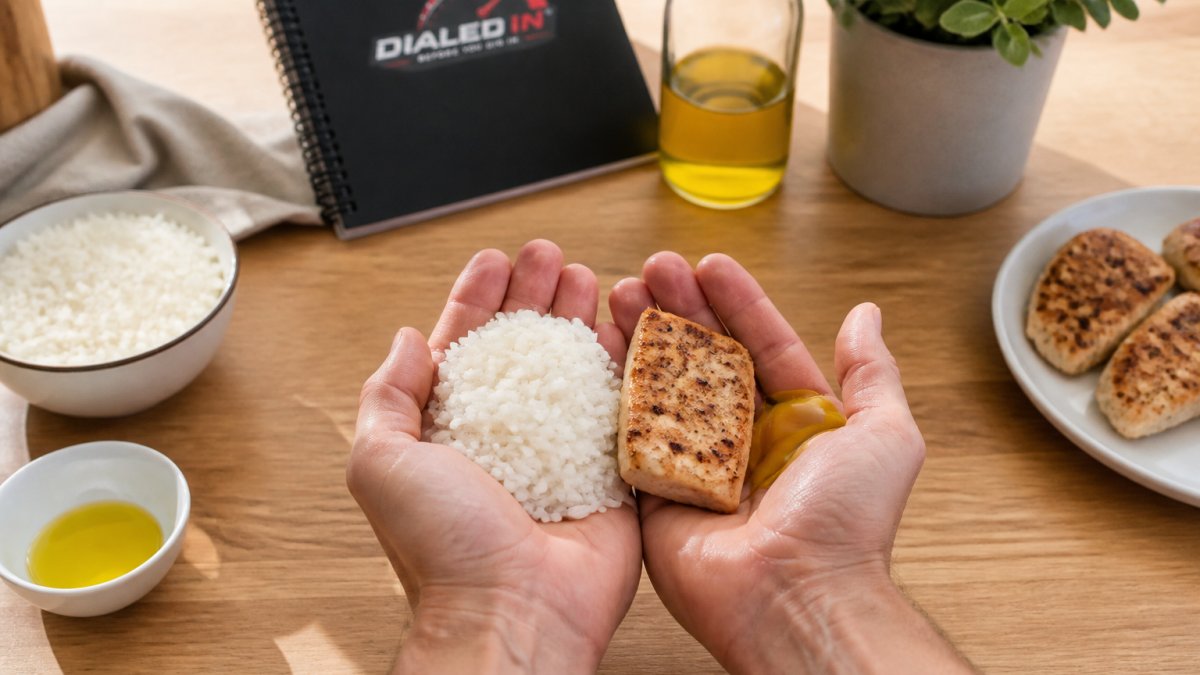
| Food Type | Hand Measure | Rough Serving |
|---|---|---|
| Protein (chicken, fish, tofu) | One palm | About 20-30 g protein |
| Carbs (rice, potatoes, pasta) | One cupped hand | One moderate serving |
| Vegetables | One to two fists | A generous pile |
| Fats (oil, nuts, avocado) | One thumb | A small dose |
The plate method is the backup. Fill half the plate with vegetables, a quarter with protein, and a quarter with carbs, then add a thumb of fat.
A Repeatable 4-Step Framework for Any Meal
Most guides stop at the table. The missing piece is a sequence you can run at every meal without thinking. Use this order:
- Anchor with protein. Place one palm of a protein food on the plate first. This sets the fullness and muscle-retention base and prevents the carb-heavy plate most people default to.
- Add vegetables for volume and fiber. Add one to two fists of vegetables. They fill the plate, slow digestion, and add micronutrients without changing the macro math much.
- Choose one cupped hand of carbs. Rice, potatoes, pasta, tortillas, or fruit. Adjust the number of cupped hands based on training load and goal (see the adjustment section below).
- Finish with one thumb of fat. Olive oil, butter, nuts, seeds, avocado, or cheese. Fat carries flavor and slows digestion, but it is calorie-dense, so the thumb is the ceiling for most meals.
That sequence, protein, vegetables, carbs, fat, is the whole method. It works for a home-cooked plate, a restaurant entree, and a assembled bowl. The hand measures are the ruler; the sequence is the recipe.
Hand Portions vs. the Plate Method: When to Use Each
The hand guide and the plate method are not competing systems, they solve different problems. Use the hand guide when you are assembling a mixed dish (a bowl, a stir-fry, a sandwich) where you cannot easily see the plate proportions. Use the plate method when you are looking at a full plate and want a fast visual check: half vegetables, a quarter protein, a quarter carbs, plus a thumb of fat. If the plate looks off, the hand guide tells you which portion to move.
How to Get Enough Protein Without Tracking Macros
Getting enough protein without tracking macros comes down to anchoring every meal with a palm-sized portion and adding protein to snacks. Most people under-eat protein at breakfast, then chase it all day.
A common mistake is treating protein as a dinner-only food. Spread it across three meals and one snack instead.
- Eggs or Greek yogurt at breakfast
- Leftover chicken or tuna at lunch
- Cottage cheese, jerky, or a protein shake as a snack
- Fish, lean beef, beans, or tofu at dinner
Protein-rich foods also support satiety, so hunger drops and portion control gets easier without willpower. The USDA Dietary Guidelines for Americans outline general protein and nutrient recommendations worth reviewing.
Balanced Meal Examples Without Counting Calories
Balanced meal examples without counting calories show the method in action better than any rule. Each plate below follows the palm-fist-cupped-hand structure with no numbers attached.
- Breakfast: two eggs, a fist of spinach, a cupped hand of oats, a thumb of peanut butter
- Lunch: a palm of grilled chicken, a fist of roasted vegetables, a cupped hand of quinoa, a thumb of olive oil
- Dinner: a palm of salmon, two fists of salad, a cupped hand of potatoes, a thumb of avocado
A Sample Day of Meals With Visual Portions
A sample day might run: eggs and fruit at breakfast, a chicken grain bowl at lunch, Greek yogurt with nuts as a snack, and salmon with vegetables and rice at dinner. Each meal carries a palm of protein, a fist or two of vegetables, a cupped hand of carbs, and a thumb of fat.
That structure delivers a balanced mix of macros and fiber. It also keeps energy steady through the afternoon slump.
Macro-Friendly Meal Planning for Busy Weeks
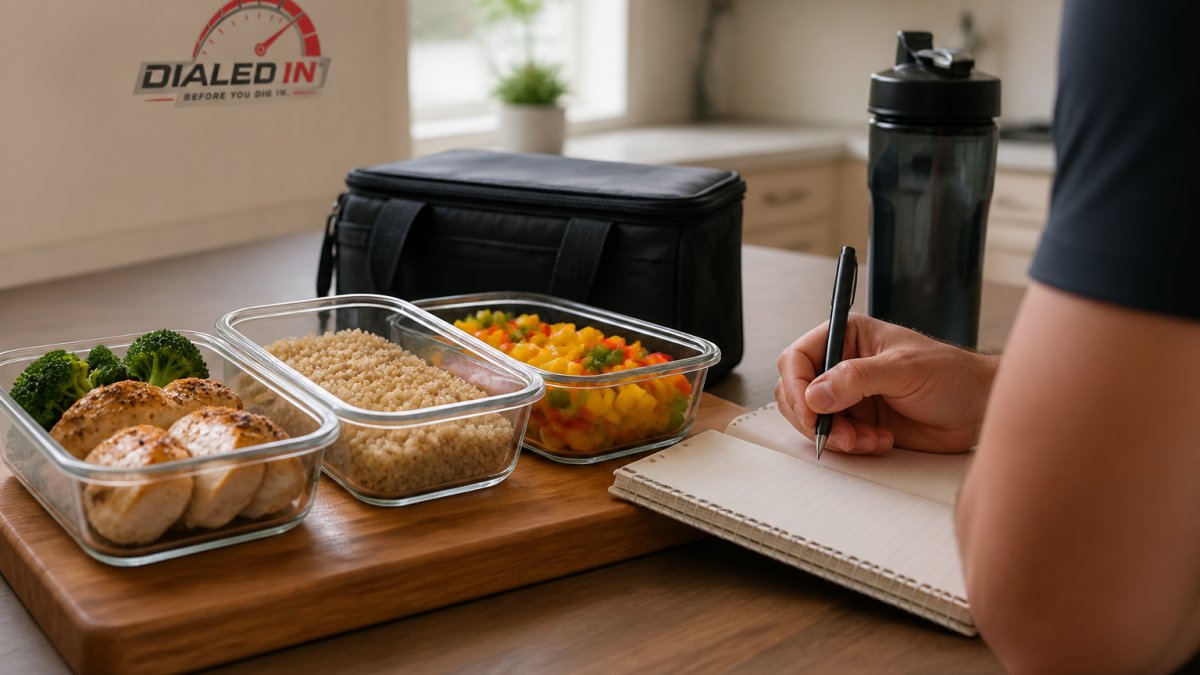
Macro-friendly meal planning works best when protein and vegetables get prepped in bulk and carbs get cooked fresh. Spend one short session on Sunday prepping the parts that take time.
- Cook a large batch of protein: chicken, ground turkey, or tofu
- Wash and chop vegetables for quick roasting or salads
- Cook a pot of rice, quinoa, or potatoes
- Portion snacks into grab-and-go containers
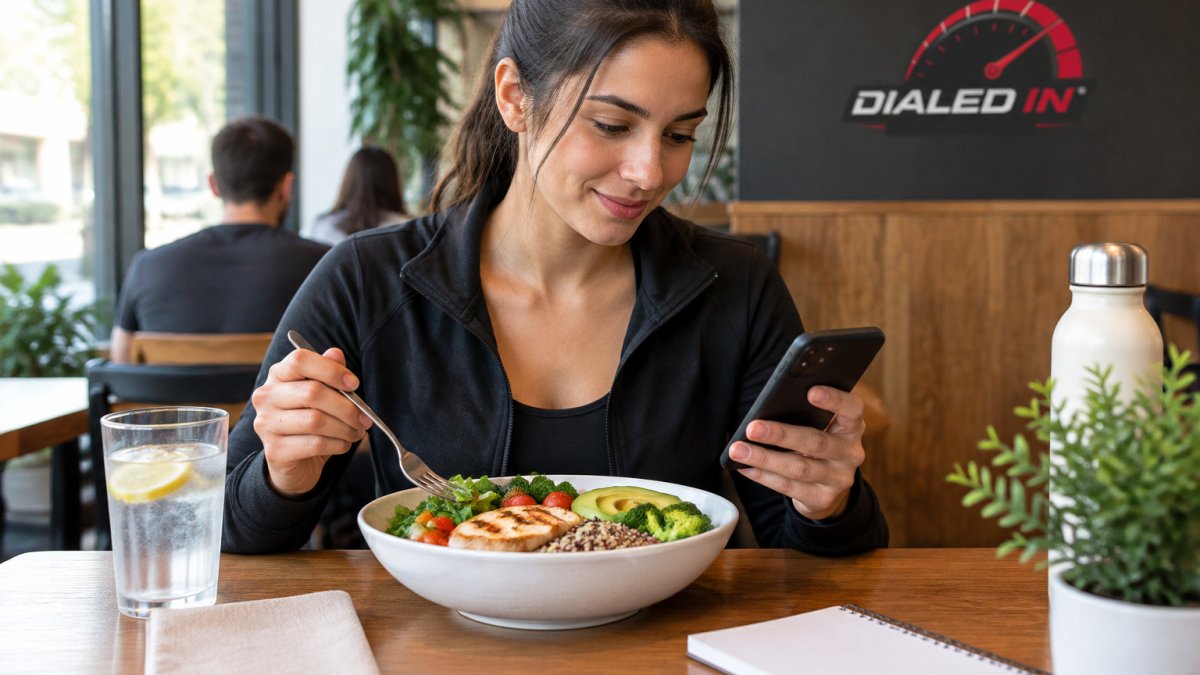
For restaurant meals, scan the menu for a protein anchor and a vegetable side, then add a carb and a fat. Dialed In's real-time coaching analyzes a menu or fridge and suggests choices matched to a goal.
Skipping meal prep and deciding every meal while hungry is the fastest way to abandon this method. Prep protein and vegetables in advance, or the default becomes takeout.
How to Adjust Portions for Your Body, Activity Level, and Goals
Adjusting portions for body size, activity level, and goals means changing the number of hand portions, not counting grams. The hand guide is a starting template, not a fixed prescription. The same palm-fist-cupped-hand structure scales up or down by adding or removing portions, and the right number depends on three variables: your size, your training load, and your goal.
Start With a Baseline, Then Scale
Most people can start with the standard plate: one palm of protein, one to two fists of vegetables, one cupped hand of carbs, and one thumb of fat per meal. From there, adjust the number of portions rather than the size of each portion. A larger person or a higher-training athlete adds portions; a smaller person or a lower-activity day removes them. The hand measure stays the same, the count changes.
- Building muscle: add a second palm of protein and an extra cupped hand of carbs around training. Keep vegetables high and fat at one to two thumbs. The extra carbs fuel training and recovery; the extra protein supports muscle repair.
- Losing fat: keep protein at one to two palms, reduce carbs to one cupped hand, and keep vegetables high. Fat stays at one thumb. Protein and vegetables protect fullness while the carb portion shrinks.
- Maintaining weight: hold the standard plate and adjust based on hunger and energy. Maintenance is the calibration point, if weight and energy are stable, the portions are right.
Match Portions to Training Demand
Training days call for more carbs. Rest days need fewer. A common pattern is to add one cupped hand of carbs on hard training days and remove one on rest days, while keeping protein and vegetables steady. This is the simplest way to periodize intake without counting anything. The CDC physical activity guidelines offer a useful baseline for matching food to activity.
A Quick Scaling Guide by Body Size and Activity
Use this as a starting point, then adjust based on the progress signals in the next section:
| Situation | Protein per meal | Carbs per meal | Fat per meal |
|---|---|---|---|
| Smaller body, lower activity | 1 palm | 1 cupped hand | 1 thumb |
| Average body, moderate activity | 1 palm | 1-2 cupped hands | 1 thumb |
| Larger body or high training load | 1-2 palms | 2 cupped hands | 1-2 thumbs |
| Fat-loss goal | 1-2 palms | 1 cupped hand | 1 thumb |
| Muscle-gain goal | 2 palms | 2 cupped hands | 1-2 thumbs |
These are starting points, not rules. The next section explains how to tell whether the portions are working without turning the process into tracking.
How to Track Progress Without Turning It Into Tracking
Progress can be assessed without a food diary. Watch energy, hunger, strength in the gym, how clothes fit, and a weekly average body weight rather than daily fluctuations.
If clothes feel tighter and energy dips, trim one cupped hand of carbs. If strength stalls and hunger spikes, add a portion back. Review every two to three weeks, not every day.
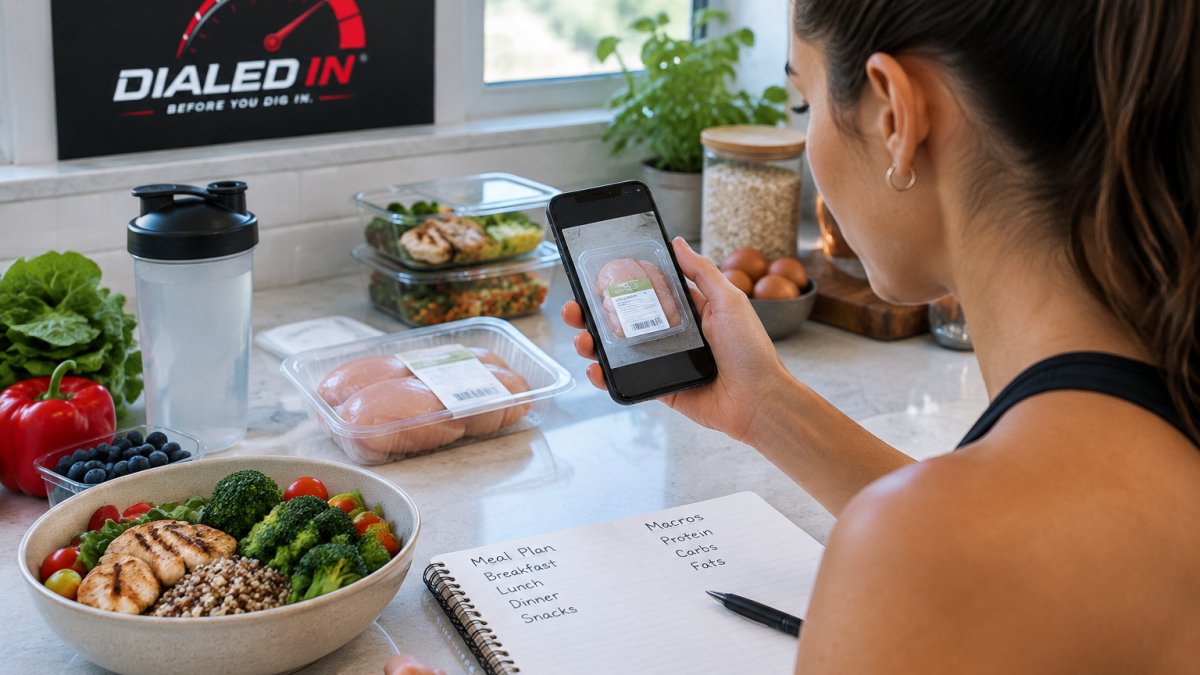
Point the camera at a meal and get a recommendation tied to the goal, with no account or manual logging. It replaces the spreadsheet with a decision.
Judge progress on trends over weeks, not single days. Adjust one portion at a time, then hold steady long enough to see the result.
Conclusion
Balancing macros without counting calories is a skill built on hand portions, protein anchors, and steady review. The hardest part is consistency across busy weeks and restaurant meals.
Point the camera at any menu, plate, or fridge item for real-time, goal-based recommendations. There is no account, no onboarding, and no manual logging. Claim Your Founder Spot and start making smarter food decisions today.
Frequently Asked Questions
How can I balance my macros without counting calories?
Build each meal around a palm of protein, a cupped hand of carbohydrates, a fist of vegetables, and a thumb of fat. This hand portion guide for macros keeps your plate balanced without a food scale or app. Eat protein first at every meal, fill half the plate with vegetables for fiber and fullness, and adjust the carb and fat portions based on your energy and goals. It is a repeatable method you can use at home or in a restaurant.
Can I lose fat without counting calories or macros?
Yes. Fat loss depends on a calorie deficit, and you can create one through portion awareness rather than numbers. Prioritize protein and high-fiber foods, which increase satiety so you eat less without measuring. Use hand portions to keep servings consistent, choose minimally processed foods most of the time, and check progress every few weeks through how clothes fit, energy levels, and strength in training. If nothing changes after three to four weeks, shrink your carb and fat portions slightly.
How do I know if my macros are balanced without tracking?
Use body signals and plate composition as your feedback loop. A balanced meal leaves you full for three to four hours, keeps energy steady, and supports consistent training performance. Visually, roughly half your plate should be vegetables, a quarter protein, and a quarter carbs, with a small amount of fat. If you are hungry an hour after eating, add protein and fiber. If you feel sluggish, check whether carbs are too low or portions too large.
How can I estimate portion sizes without a food scale?
Your hand is proportional to your body, so it scales naturally. A palm equals a protein serving, a cupped hand equals a carb serving, a fist equals a vegetable serving, and a thumb equals a fat serving. Taller or more active people have larger hands and naturally serve themselves more. For restaurant meals, compare the portion to your hand when it arrives and box the excess before you start eating.