 How-to
How to Track Body Recomposition Progress Without a Scale
Table of Contents
- Why the Scale Lies About Body Recomposition
- Body Recomposition Progress Photos: Your Most Honest Feedback Tool
- How Often to Take Progress Photos (and When to Ignore Them)
- Body Measurements for Fat Loss: What to Measure and How
- Building a Body Recomposition Progress Tracker
- Clothes Fit, Strength Gains, and Daily Energy: The Non-Scale Wins
- When Your Signals Conflict: A Decision Framework
- Conclusion
- Frequently Asked Questions
Last Updated: October 21, 2026
Why the Scale Lies About Body Recomposition
Body recomposition is the process of losing fat while building muscle at the same time. The scale cannot show that trade.
That is why how to track body recomposition progress without scale data is the smarter approach. A dialed-in tracking system reads signals the scale ignores.
Two things happen during body recomp. Fat mass drops. Lean mass climbs. When both move at once, total weight barely shifts.
Water weight adds noise on top. A salty meal, a hard workout, or poor sleep can swing daily weight by several pounds.
So what should you track instead? Five signals, covered below.
Body Recomposition Progress Photos: Your Most Honest Feedback Tool
Progress photos are the single best visual record of body recomposition. They capture shape, posture, and muscle tone in a way no number can. But most people take photos casually and then wonder why they cannot see change. The fix is a repeatable protocol that removes variables.
A Repeatable Photo Protocol
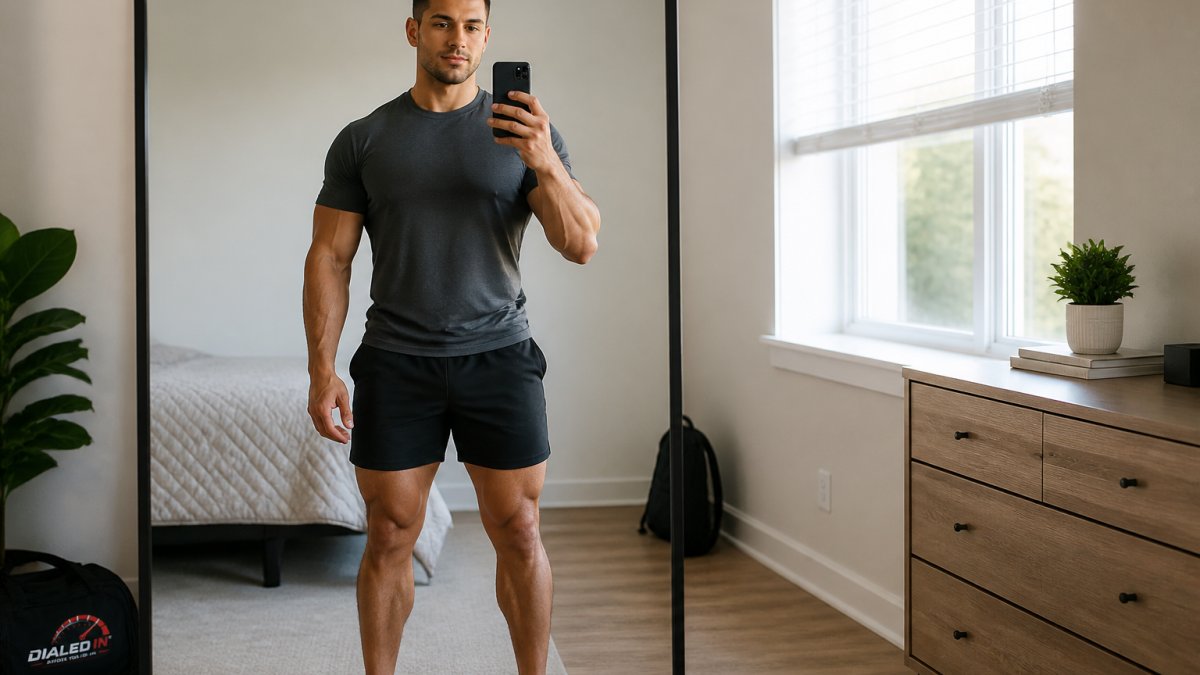
A photo is only useful if you can compare it to the next one. That means controlling five variables every single time:
- Lighting: Use the same light source and direction. Indirect daylight from a window is ideal. Avoid overhead fluorescent light, which casts shadows that flatten muscle definition and exaggerate softness. If you shoot in a gym locker room, pick the same stall and the same time of day.
- Distance and camera height: Place the phone at chest height on a stable surface or tripod. The camera should be level, not angled up or down. Stand the same distance from the lens each session, mark the floor with tape if needed. A phone propped on a shelf at eye level works better than a handheld selfie, which shifts angle and distance.
- Poses: Take three shots: front relaxed, side relaxed, and back relaxed. Arms at your sides, feet shoulder-width apart, neutral expression. Do not flex or suck in. If you want a flexed comparison set, take it separately and label it clearly so you never compare relaxed to flexed.
- Clothing: Wear the same fitted clothing or the same minimal clothing each time. Loose clothing hides the changes you are trying to see. Fitted shorts and a sports bra or fitted t-shirt work well. Avoid changing outfits between check-ins.
- Timing: Shoot in the morning, after using the bathroom and before eating or drinking. This controls for bloating and food volume. Keep the day of the week consistent, a Monday morning photo compared to a Friday evening photo introduces noise from a week of meals and training.
Store all photos in one folder and label them by date and condition (for example, "2026-10-21_morning_fasted_front"). When you compare, open the oldest and newest side by side at the same zoom level. Do not scroll through a camera roll, that invites cherry-picking.
Why the Protocol Matters More Than the Camera
A photo taken in harsh overhead light at night cannot be compared to one shot by a window in the morning. The lighting changes the body more than a month of training does. The same is true of a phone held at waist height versus chest height, the angle alone can make a waist look wider or narrower. Most guides skip these details, which is why so many people give up on photos. A controlled protocol turns a subjective snapshot into a repeatable measurement.
How Often to Take Progress Photos (and When to Ignore Them)
Take body recomposition progress photos every two to four weeks. That window is long enough to catch real change and short enough to stay motivating.
Weekly photos create false alarms. Bloating, a pump from training, or a bad night's sleep can change how a body looks in 24 hours. Two-week gaps smooth out that noise.
When to ignore a photo set:
- You shot it after a big meal or a night of poor sleep
- The lighting or angle differs from your baseline
- You are mid-menstrual cycle, when water retention peaks
- You changed the camera distance
If any of those apply, keep the photo but do not judge progress from it. Wait for the next clean set.
Body Measurements for Fat Loss: What to Measure and How
Body measurements for fat loss beat the scale because they target specific areas. The waist tells the clearest story during body recomp.
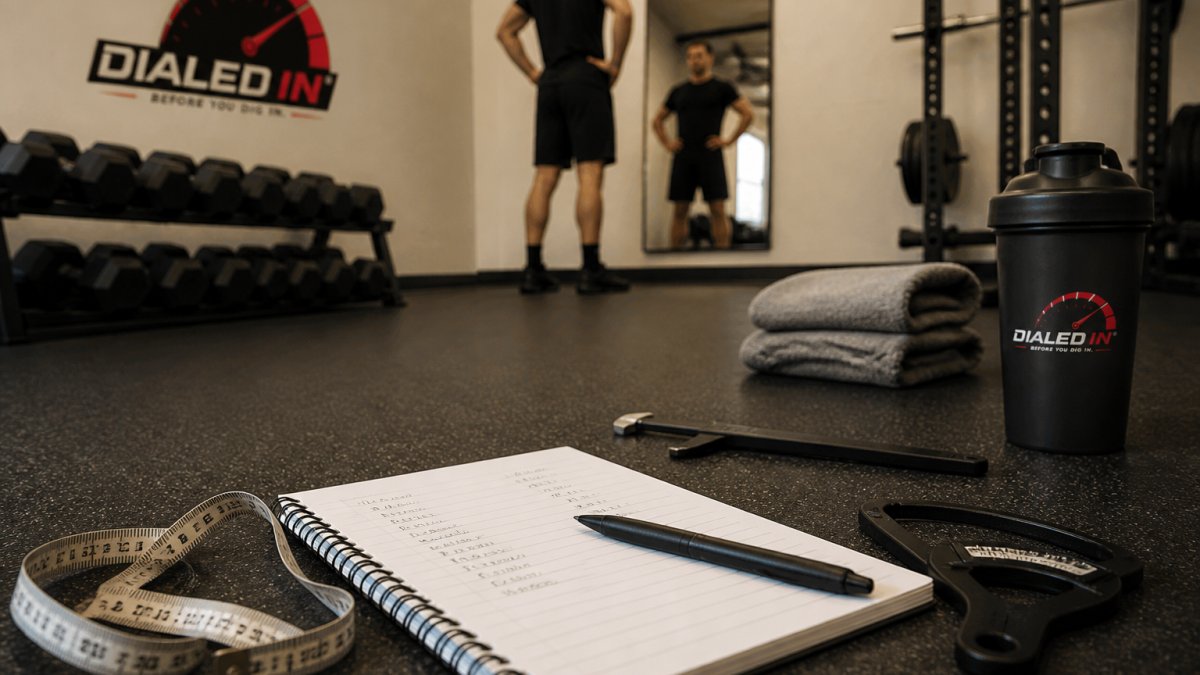
Measure these five points:
- Waist at the navel, relaxed, after exhaling
- Hips at the widest point
- Chest at the nipple line
- Thigh at the midpoint between hip and knee
- Upper arm at the midpoint, flexed
Use a flexible tape and keep it level. Pull snug, not tight. Measure the same side of the body each time. Take each spot twice and record the average.
Track measurements every two to four weeks, on the same day as photos. A shrinking waist with a stable or growing arm is body recomposition working exactly as intended.
Building a Body Recomposition Progress Tracker
A body recomposition progress tracker turns scattered numbers into a trend. A simple spreadsheet works fine.
Set up one row per check-in with these columns:
| Column | What to Log | Frequency |
|---|---|---|
| Date | Check-in day | Every 2-4 weeks |
| Waist | Centimeters at navel | Every 2-4 weeks |
| Hips, chest, arm, thigh | Centimeters at fixed points | Every 2-4 weeks |
| Photo set | Front, side, back saved | Every 2-4 weeks |
| Strength | Key lift weight and reps | Weekly |
| Clothes fit | Notch on a belt, waistband feel | Weekly |
| Energy | 1-5 rating | Daily or weekly |
Log the trend, not single readings. One waist measurement means little. Four measurements over two months show direction.
Nutrition drives most of the result, and that is where Dialed In fits. The app reads a menu, a fridge, or a pantry shelf and suggests choices that match a fat-loss or muscle-building goal. No logging, no spreadsheets for food.
Clothes Fit, Strength Gains, and Daily Energy: The Non-Scale Wins
Clothes fit is one of the most reliable non-scale victories.
Strength gains tell the muscle side of the story. If the same lift moves more weight or more reps at the same body weight, muscle is being built.
Daily energy and mood matter too. Better energy during workouts and steadier focus through the day often follow improved body composition. Rate energy on a simple 1-5 scale and watch the trend.
Other progress indicators worth noting:
- Stairs and hills feel easier
- Sleep quality improves
- Confidence in fitted clothes rises
- Recovery between sessions gets faster
When Your Signals Conflict: A Decision Framework
Signals will conflict. That is normal during body recomposition, because fat loss and muscle gain move different markers at different rates. The waist can shrink while weight holds steady. Strength can climb while photos look the same. The skill is reading the pattern, not any single reading.
Why Signals Diverge
Fat mass and lean mass change on different timelines. Muscle gain is slow, most trained lifters can expect roughly 0.5 to 1 pound of muscle per month under good conditions, and that rate drops the longer you train. Fat loss can move faster, especially early on. When both happen at once, total weight barely shifts, and the scale stays flat.
That is why you need to read photos, tape measurements, clothing fit, and strength together over a four-to-eight week window. A single check-in is a snapshot; a trend is a signal.
A Decision Framework for Conflicting Signals
Use this framework when your indicators disagree. Judge on a four-to-eight week window, never a single check-in.
- Waist down, weight flat: classic body recomposition. Fat is leaving while muscle is being built. Keep going.
- Waist flat, strength up, clothes looser: muscle gain and fat loss are balancing out. The tape may lag because muscle sits under the skin and can offset fat loss at the waist. Trust the strength trend and the clothing fit. Keep going.
- Waist up, strength up, photos unchanged: possible water retention or a calorie surplus. Check nutrition for two weeks. If strength keeps climbing and the waist settles, you are likely in a slight surplus and building. If the waist keeps climbing, tighten food choices.
- Everything flat for six weeks: change one variable, either training volume or food choices. Do not change both at once or you will not know what worked.
- Photos worse, measurements better: trust the tape and the trend over one photo set. A bad photo day is often water, lighting, or digestion. Re-shoot under the protocol before drawing conclusions.
- Strength down, waist down, energy low: possible under-recovery or too aggressive a deficit. Check sleep and food intake before adding training volume.
Tracking Frequency and Normal Fluctuations
Measure and photograph every two to four weeks. That window is long enough to catch real change and short enough to stay motivating. Weekly measurements create false alarms from bloating, training pumps, and poor sleep. If you weigh yourself at all, do it weekly at most, under the same conditions.
Normal fluctuations to expect:
- Hydration: A salty meal or a hard workout can swing weight by several pounds in a day.
- Digestion: Food volume and fiber intake affect waist measurements for 24 to 48 hours.
- Menstrual cycle: Water retention peaks in the days before a period and can add inches to the waist and hips temporarily.
- Training inflammation: A new or hard session can cause temporary swelling that shows up in tape measurements.
If any of those apply, keep the data point but do not judge progress from it. Wait for the next clean check-in under the same conditions as your baseline.
Conclusion
Tracking body recomposition without a scale comes down to five signals: photos, measurements, clothes fit, strength, and energy. Log them on a fixed schedule, read the trend, and ignore single-day noise.
Nutrition remains the hardest part to keep consistent. Dialed In makes that easier with real-time AI food coaching: point a camera at any menu, meal, or fridge item and get a recommendation built around a fat-loss or muscle-building goal. No account setup, no manual logging.
Claim your founder spot and let the food decisions take care of themselves.
Frequently Asked Questions
How do you know if your body is going through body recomposition?
Body recomposition shows up as simultaneous fat loss and muscle gain. Watch for clothes fitting differently while your weight stays flat, strength going up on key lifts, and progress photos revealing a tighter waist or more defined shoulders. Measurements like waist and hip circumference often drop even when the scale doesn't move. If two or more of these signals trend in the right direction over four to six weeks, body recomposition is likely happening.
What body measurements should you take to track recomposition?
Track waist at the navel, hips at the widest point, chest at nipple line, and both upper arms and thighs at the midpoint. Use a flexible tape measure and record each site twice, averaging the results. Measure in the morning before eating, with the tape snug but not compressing skin. Waist and hip measurements are the most reliable for fat loss; arm and thigh measurements help confirm muscle gain.
How often should you take progress photos?
Take body recomposition progress photos every two weeks under identical conditions: same time of morning, same lighting, same pose, same clothing. Weekly photos invite anxiety over normal fluctuations like bloating or hydration. Every two weeks gives enough spacing to see real visual changes while keeping the habit manageable. Review photos side by side rather than in isolation, and compare the current set to one from four to six weeks earlier.
Can strength gains show that body recomposition is working?
Yes. Strength gains are one of the clearest signs of muscle building during body recomposition. Track key compound lifts like squats, deadlifts, or push-ups and note when you add reps or weight. If your waist measurement holds steady or drops while your strength climbs, you are likely gaining muscle and losing fat at the same time.