 How-to
Is Automated Nutrition Coaching Accurate? Facts
Last Updated: October 22, 2026
Quick Summary
Automated nutrition coaching is accurate enough for everyday guidance but not exact, because each stage of its four-step pipeline adds error. Expect close estimates on simple single foods and real error on mixed dishes, hidden fats, and unfamiliar cuisine. Treat the numbers as a working estimate, not a lab result.
- Simple single foods like a banana or grilled chicken breast score well; mixed dishes score far worse.
- Fat is the macro most often underestimated because it hides in cooking oil and dressings.
- Test a coach yourself by weighing five meals across three different days.
- Escalate to a registered dietitian or physician for diabetes, pregnancy, or disordered eating.
- Use the app for daily decisions and a professional for clinical and complex cases.
Table of Contents
- How Automated Nutrition Coaching Actually Works
- AI Calorie Tracking Accuracy: What the Evidence Shows
- Where Accuracy Breaks Down: Food Type, Cuisine, and Portion Size
- AI Macro Tracking: Protein, Carbs, and Fat Under Real Conditions
- A Step-by-Step Method to Test an AI Coach's Accuracy Yourself
- AI Nutrition Coach vs Human Nutritionist: Where Each One Wins
- Safety Limits, Bias, and When to Escalate to a Professional
- Frequently Asked Questions
How Automated Nutrition Coaching Actually Works
Automated nutrition coaching is software that estimates what you are eating and turns those estimates into diet advice without a person in the loop. The question of whether automated nutrition coaching is accurate starts with the pipeline. Dialed In works on exactly this problem, so the mechanics matter. Every system follows the same four stages.
From Photo to Estimate: The Four-Step Pipeline
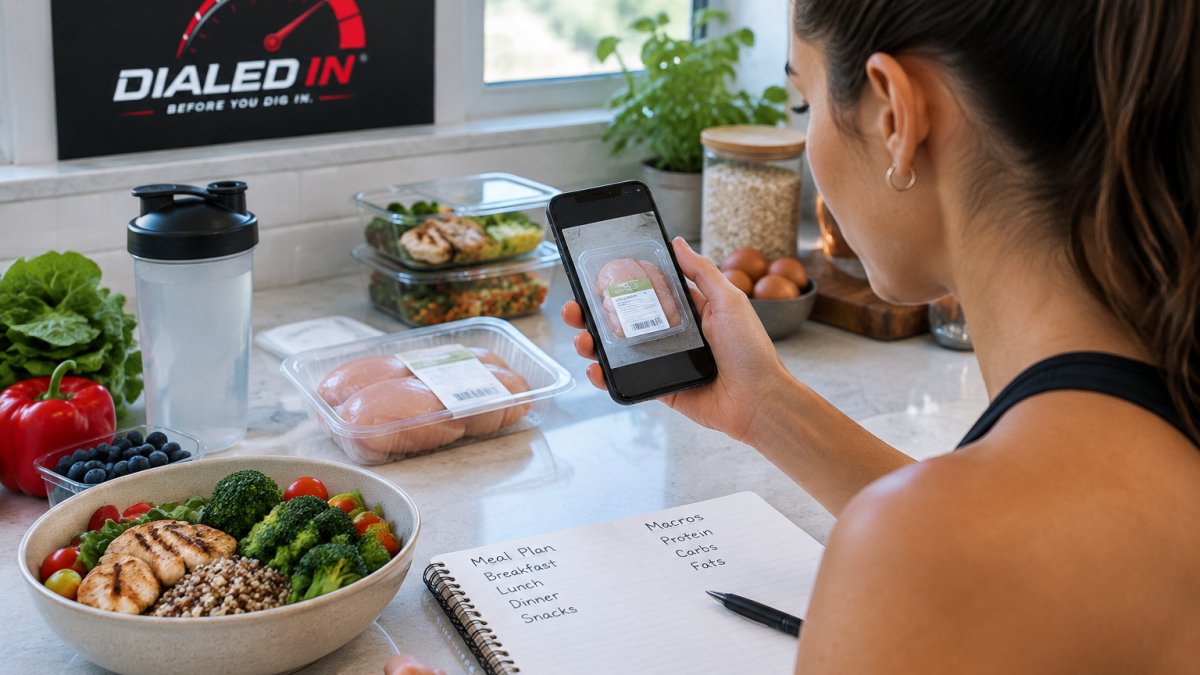
- Capture. You photograph a plate, a menu, or an open fridge.
- Recognition. The model names the foods it sees.
- Estimation. It assigns portion sizes, then calories and nutrients.
- Recommendation. It compares the estimate to your goal and suggests a next step.
Each stage adds error. A wrong food name ruins everything downstream. So does a bad portion guess.
What the Coach Does With the Numbers
The output is not a lab result. It is a working estimate used to steer choices: eat more protein here, cut the fried side there. Treat it as guidance, not a diagnosis.
AI Calorie Tracking Accuracy: What the Evidence Shows
AI calorie tracking accuracy varies widely by food and context. There is no single honest number. Published validation work on image-based dietary assessment generally reports that simple, single-item foods score well and mixed dishes score far worse. The National Institutes of Health dietary assessment research is a useful starting point for how researchers frame this problem.
The practical takeaway: expect close estimates on basics, and expect real error on complex plates.
How Accuracy Is Measured and What the Percentages Mean
Most studies compare an app's estimate to a weighed reference meal. They report error as a percentage or in grams. A "90% accurate" claim usually means one narrow test, on one food set, under good lighting.
Ask three questions before trusting any accuracy figure:
- What foods were tested?
- Who took the photos, and how?
- What was the reference method?
Where Accuracy Breaks Down: Food Type, Cuisine, and Portion Size
Accuracy is not uniform. It drops in predictable places, and knowing them helps you use these tools well.
- Mixed dishes. Stews, curries, casseroles, and bowls hide ingredients.
- Hidden fats. Butter, oil, and sauces add energy a camera cannot see.
- Layered plates. A burger or sandwich conceals what is inside.
- Unfamiliar cuisine. Models trained on common foods struggle with regional dishes.
- Portion size. A pile of rice is hard to measure from one angle.
Simple, single foods, like a banana or a grilled chicken breast, are the easy case. The harder the plate, the more you should treat the number as a range.
AI Macro Tracking: Protein, Carbs, and Fat Under Real Conditions
AI macro tracking is generally more reliable for protein than for fat. Protein sources tend to be visible and countable: a chicken breast, a scoop of yogurt, a piece of fish. Fat hides in cooking oil and dressings, so it is the macro most often underestimated.
That matters for anyone building muscle. Hitting a protein target is the goal most users care about, and it is the one these tools handle best. Carbs land in the middle: rice and bread are easy to size, but sauces and sugary drinks are not.
A Step-by-Step Method to Test an AI Coach's Accuracy Yourself
You can test any coach in an afternoon. The method below gives you real evidence instead of marketing claims.
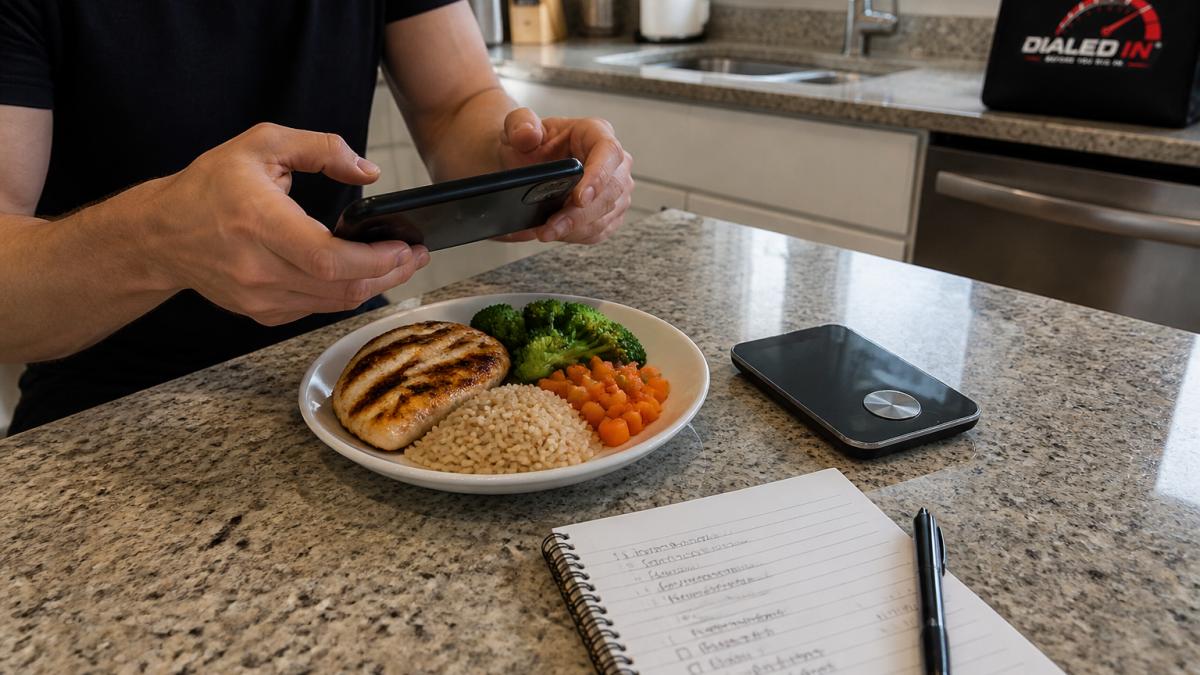
- Pick five meals. Include one simple food, one mixed dish, one restaurant plate, one home-cooked recipe, and one food from a cuisine you eat often.
- Weigh each ingredient with a kitchen scale before cooking.
- Calculate the true totals using a food database for each ingredient.
- Scan the finished plate with the app and record its estimate.
- Compare the two numbers for calories, protein, carbs, and fat.
- Repeat on three different days to smooth out random error.
- Score the results in a simple table.
| Meal Type | What to Weigh | Watch For | What a Good Result Looks Like |
|---|---|---|---|
| Simple single food | The item itself | Wrong food match | Close calorie and macro match |
| Mixed dish | Every ingredient, plus oil | Missed ingredients | Estimate within a sensible range |
| Restaurant plate | Ask for the recipe or estimate | Hidden fats, sauces | Directionally right, not exact |
| Home recipe | Each raw ingredient | Cooking losses | Consistent across repeat scans |
| Familiar cuisine | Standard components | Unrecognized dishes | Correct food names |
A coach that names foods correctly and lands in a reasonable range is working as intended. One that misses whole ingredients is not.
AI Nutrition Coach vs Human Nutritionist: Where Each One Wins
An AI nutrition coach wins on speed, cost, and consistency. A human nutritionist wins on context, medical judgment, and accountability.
| Factor | AI Coach | Human Nutritionist |
|---|---|---|
| Speed | Instant, any meal | Scheduled sessions |
| Cost | Low, ongoing | Higher, per visit |
| Food recognition | Fast, improving | Slower, but contextual |
| Medical conditions | Not equipped | Trained to handle |
| Accountability | Self-driven | Built into the relationship |
| Best for | Daily decisions | Clinical and complex cases |
The honest answer is that they solve different problems. Use the app for the hundred small choices in a week. Use a professional when health conditions, medications, or disordered eating are involved.
Safety Limits, Bias, and When to Escalate to a Professional
Automated tools carry real limits, and the most useful thing an article can do is tell you where those limits sit and what to do when you reach them. Competitors mention safety in passing. This section gives you a framework for deciding when an app is enough and when a person needs to be involved.
Where Bias Shows Up
Accuracy is not uniform across users or cuisines. A model trained mostly on common Western foods will struggle with regional dishes, and a model trained on typical body types may misjudge portions for users whose plates look different from the training set. A few patterns are worth knowing:
- Cuisine coverage. Dishes that are uncommon in training data are more likely to be misnamed or missed entirely.
- Preparation method. The same ingredient fried, steamed, or smothered in sauce produces very different calorie totals, and the camera cannot see the method.
- Tracking experience. New users tend to take photos from awkward angles and forget to log snacks, which adds user error on top of model error.
- Body type and plate size. Portion estimation relies on visual cues that vary with plate size, camera angle, and the user's own frame of reference.
None of this makes the tools useless. It means you should expect more error on unfamiliar foods and adjust your trust accordingly.
Clinical Safety and Contraindications
Some situations call for a qualified professional rather than an app. Escalate to a registered dietitian or physician when:
- You manage diabetes, kidney disease, heart disease, or another condition with dietary rules.
- You take medications that interact with food, such as blood thinners or thyroid medication.
- You are pregnant, breastfeeding, or feeding a child.
- You have a history of disordered eating or notice obsessive tracking, guilt, or rigid rules around meals.
- You have food allergies or intolerances where a mislabeled dish carries real risk.
The Academy of Nutrition and Dietetics guidance on personalized nutrition is a sound reference for when professional input matters. Privacy deserves the same care: check where images are stored, how long they are kept, and whether they are used to train models before you scan.
A Hybrid Human-Plus-Automation Workflow
The most practical answer is not app versus human. It is a division of labor. A concrete workflow looks like this:
| Task | Automate | Human Review |
|---|---|---|
| Daily food logging | Yes | Spot-check weekly |
| Calorie and macro estimates | Yes | Review trends, not single meals |
| Meal ideas for simple goals | Yes | Approve the plan |
| Medical or medication interactions | No | Always |
| Disordered eating signals | No | Always |
| Complex dietary needs | Partial | Always |
Use the app for the hundred small choices in a week. Use a professional when health conditions, medications, or disordered eating are involved, and use the app's trend data to make those professional visits more productive.
For everyday decisions, a tool built for real-time choices, like Dialed In, keeps the focus on the next meal rather than a perfect log.
Frequently Asked Questions
Can AI accurately estimate calories and macros from a meal photo?
It can get close, but not exact. A single photo gives the model shape, color, and visible ingredients, not weight, cooking oil, or hidden sugar. Estimates usually land in a reasonable range for simple plates like grilled chicken and rice, and drift further off for mixed dishes, sauces, and layered meals. Treat any photo-based number as a starting estimate rather than a measurement, and check it against a scale or a label when precision matters for your calorie targets.
What factors affect the accuracy of automated nutrition advice?
Four things move the number most: portion size, preparation method, recipe composition, and image quality. A cup of rice versus two cups changes calories far more than any model error. Frying versus steaming can double the fat content of the same vegetable. Mixed dishes hide ingredients the camera cannot see. Dim lighting, odd angles, and partial plates add error on top. Advice quality also depends on how well your stated goals and dietary preferences match what the coach assumes about you.
When should you consult a registered dietitian instead of using an AI nutrition coach?
See a registered dietitian if you manage a diagnosed condition such as diabetes, kidney disease, or an eating disorder, if you are pregnant, or if you take medication that interacts with food. Automated nutrition coaching is built for general goals like fat loss, muscle gain, and weight maintenance. It is not a clinical tool and should not replace medical nutrition therapy. For everyday food decisions, an AI coach can handle the routine work; for diagnosis and treatment, a licensed professional should lead.
Is a nutrition coach worth it compared with an AI coach?
It depends on what you need. A human coach brings accountability, context, and the ability to adjust a plan around injuries, travel, and life stress, and typically costs far more per month. An AI nutrition coach handles the moment-to-moment decisions, like what to order at a restaurant, at a fraction of the cost and without scheduling. Many people get the best result from automation for daily choices plus occasional check-ins with a professional when goals change.
The gap between a good estimate and a perfect one rarely decides your results. Consistency does. If manual logging has failed before, Dialed In offers real-time AI food decision coaching that works on any menu, meal, or refrigerator item, with no account, onboarding, or manual logging required. Recommendations are personalized to your fitness goals, whether that means losing fat, building muscle, or maintaining weight. Claim your founder spot and start making smarter food choices today.