 How-to
How to Eat Healthy at All-Inclusive Resorts Without Dieting
Last Updated: November 13, 2026
Quick Summary
Eating healthy all-inclusive means planning your meals before you arrive: pick two anchor meals, keep lunch light, and set a few simple rules like one plate per meal and water with every meal. Build each buffet plate half vegetables, a quarter lean protein, and a quarter whole grains, and choose your desserts and drinks on purpose rather than by habit.
- Pick two anchor meals, keep lunch light, and schedule one afternoon snack.
- Fill half your plate with vegetables, a quarter with lean protein, a quarter with whole grains.
- Use the salad plate for your main course and wait ten minutes before deciding on seconds.
- Keep food at the table on a plate, seated, to avoid grazing all day.
- Alternate each alcoholic drink with a full glass of water and set a daily limit first.
Table of Contents
- Start With a Plan: Your Healthy Vacation Meal Plan
- Building a Balanced Plate at the Buffet
- Portion Control at Buffets: Simple Tactics That Work
- How to Avoid Overeating on Vacation Without Feeling Deprived
- Making Healthy All-Inclusive Buffet Choices: What to Pick and What to Skip
- Navigating Dietary Restrictions and Food Allergies at Resorts
- Staying Hydrated and Managing Alcohol and Desserts
- Use Dialed In to Make Smarter Food Choices on the Spot
- Frequently Asked Questions
Start With a Plan: Your Healthy Vacation Meal Plan
Most vacation weight gain comes from a hundred small, unplanned buffet decisions, not one big splurge.
This guide from Dialed In shows you how to build that plan in minutes, with tactics for navigating buffets, portion control, and treats without turning vacation into a diet.
The core idea: decide your defaults in advance, then let the resort handle the rest.
Map Out Meal Times and Snacks
Resorts run on their own schedule, and that's a trap. If breakfast stretches to 11 a.m. and dinner starts at 5, you can easily eat four times before noon.
Do this instead:
- Pick two anchor meals: breakfast and dinner
- Keep lunch light, built around vegetables and protein
- Schedule one afternoon snack, not constant nibbling
Knowing when you'll eat removes the "I'm starving, I'll take everything" moment.
Set a Few Simple Rules Before You Arrive
Rules beat willpower. Pick three, write them down, and stick to them.
- One plate per meal, no returns
- Water with every meal
- Dessert once a day, not at every meal
These aren't restrictions. They're guardrails that let you relax because the hard decisions are already made.
Building a Balanced Plate at the Buffet
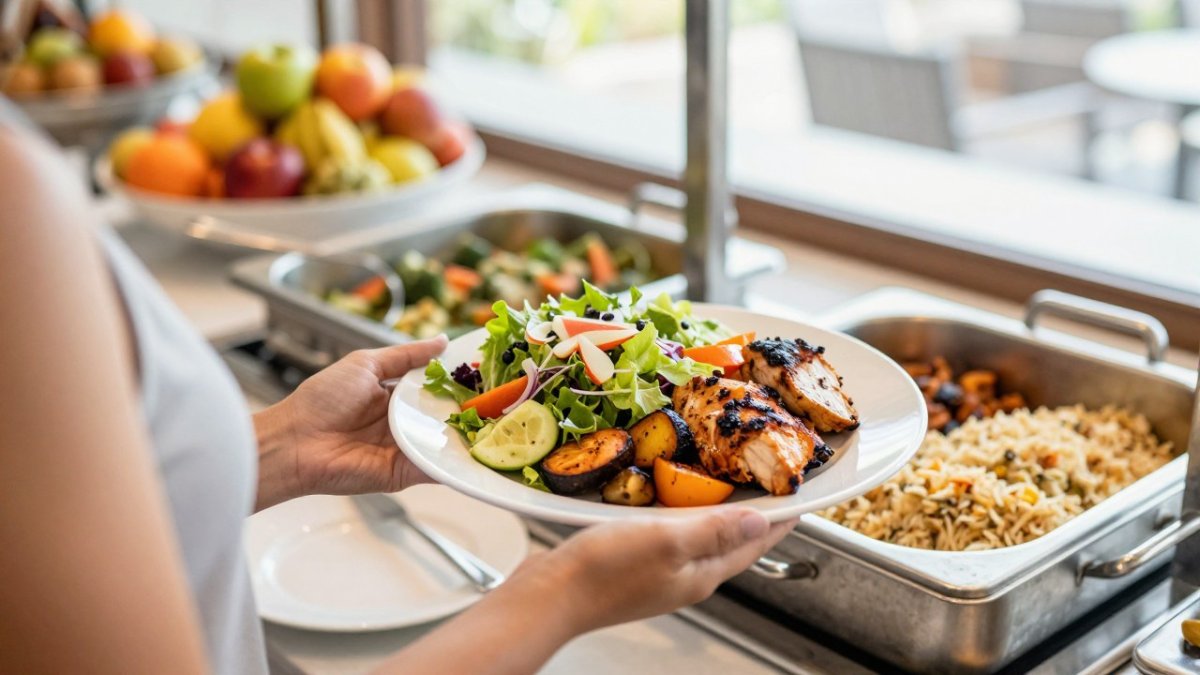
The balanced plate is the single most useful tool at an all-inclusive resort: half vegetables, a quarter lean protein, a quarter whole grains or starch. You don't count anything. You just look at your plate and adjust.
A plate built this way is a practical way to manage portions without counting anything.
The woman is American.
The Healthy Plate Visual Guide
Picture a clock face on your plate:
- 12 to 6 on the right half: vegetables and salad. Fill it. Leafy greens, roasted vegetables, tomatoes, peppers.
- 6 to 9 on the lower left: lean protein. Grilled chicken, fish, eggs, beans, plain yogurt.
- 9 to 12 on the upper left: whole grains or starch. Rice, potatoes, whole-grain bread, oatmeal.
Build every lunch and dinner plate this way and you've solved most of the problem before you take a single bite.
Load vegetables first, protein second, and starch last, so the higher-calorie items naturally take up less of the plate.
Portion Control at Buffets: Simple Tactics That Work
Portion control at buffets comes down to three physical habits: use a smaller plate, take one serving per station, and never carry a second plate in the same trip. These habits can make portion control easier.
Buffets are designed to make you take more: bigger plates, endless refills, food within arm's reach.
Try these:
- Use the salad plate for your main course
- Take one scoop per dish, not a mound
- Sit far from the buffet line
That ten-minute pause is the most underrated tactic here. Many second trips are habit rather than hunger. If you're still hungry after ten minutes, go back.
For a deeper look at tool-based portion tactics, see how AI nutrition tools help you control portions.
How to Avoid Overeating on Vacation Without Feeling Deprived
Deprivation is the enemy of a good vacation.
The mindset shift: you're not on a diet, you're on vacation with standards. You still enjoy the good stuff.
A few rules that keep it fun:
- Eat what you love, skip what you don't
- If it's not amazing, don't finish it
- Save your splurge for the meal that matters
That last one matters more than people think.
For a step-by-step approach to eating with intention, this guide on 7 steps to use AI for mindful eating habits pairs well with vacation planning.
Avoid Grazing and Unnecessary Trips to Food Stations
Grazing is the quiet killer of vacation nutrition. A bite here, a taste there, and by evening you've eaten a full meal's worth without sitting down once.
Set a rule: food happens at the table, on a plate, seated.
Also cut the "just checking what's available" walks. Those trips almost always end with a plate in your hand.
Making Healthy All-Inclusive Buffet Choices: What to Pick and What to Skip
Healthy all-inclusive buffet choices come down to knowing your best bets before you reach the line.
The buffet isn't the problem. Standing in front of it with no plan is. Here's the pick-and-skip list to carry in your head.
For more detail on ordering well from any menu, this guide to healthy restaurant meals covers what to order when you're not at a buffet.
Best Bets for Breakfast, Lunch, and Dinner
Breakfast: eggs, plain yogurt, oatmeal, fresh fruit, whole-grain toast, avocado. These keep you full and set the tone for the day.
Lunch: grilled chicken or fish, a big salad, roasted vegetables, beans, rice. Keep it lighter than dinner so you have room to enjoy the evening meal.
Dinner: lean protein, vegetables, a modest starch, and one dessert you actually want. Dinner is where the splurge belongs.
| Meal | Best Bets | Limit |
|---|---|---|
| Breakfast | Eggs, yogurt, oatmeal, fruit | Sugary pastries, juice |
| Lunch | Grilled protein, salad, vegetables | Fried foods, creamy sauces |
| Dinner | Lean protein, vegetables, whole grains | Multiple desserts, heavy sauces |
| Snacks | Fresh fruit, nuts, vegetables | Chips, candy, ice cream |
Navigating Dietary Restrictions and Food Allergies at Resorts
Food allergies and dietary restrictions need a plan, not hope. Resorts handle this well when you ask, and badly when you assume. Preparing ahead for food allergies and dietary restrictions can prevent problems during your trip.
Start here:
- Tell the resort about allergies when you book, and again at check-in
- Ask to speak with a chef or manager at each restaurant, not just a server
- Ask about cross-contamination at shared stations
Cross-contamination is the real risk at buffets: shared tongs, shared surfaces, dishes that look safe but aren't. If you have a serious allergy, ask staff to serve you from the back rather than using the public line.
What to Say to Resort Staff
Vague requests get vague answers. Use specific language that puts the burden on the kitchen to confirm, not on you to guess.
- At booking: "I have a severe allergy to tree nuts. Please note it on my reservation and tell me which restaurants can accommodate it."
- At the host stand: "I need to speak with the chef about a shellfish allergy before I eat. Can you bring them out?"
- At the buffet: "Which dishes on this line are prepared without dairy, and which utensils are used only for those dishes?"
It can help to ask for the chef, rather than only the server, to confirm which sauces and marinades contain allergens.
Buffet Cross-Contamination: Where It Hides
The obvious risks are shared tongs and serving spoons. The less obvious ones are what sink people:
- Garnishes and sauces that contain nuts, dairy, or gluten without looking like it
- Fried foods cooked in shared oil with allergen-containing items
- Dessert stations where a single serving utensil moves between items
If a station looks risky, skip it. No single dish is worth a reaction. Ask for a plate assembled in the kitchen from ingredients you have confirmed are safe.
Dietary Restrictions Beyond Allergies
Many resorts can accommodate vegetarian, vegan, gluten-free, low-sodium, and religious diets with advance notice. The same rule applies: ask early, ask specifically, and confirm at each meal.
Watch out: a dish labeled "gluten-free" at a buffet can still be contaminated by shared utensils or a shared fryer, so confirm preparation, not just the label.
If you have a medical diet tied to a condition such as diabetes or hypertension, tell the resort in advance and ask whether the kitchen can prepare lower-sodium or lower-sugar versions.
Staying Hydrated and Managing Alcohol and Desserts
Hydration and alcohol are important parts of vacation eating. Both affect how much you eat and how you feel.
Water first, always. Resort heat and alcohol both dehydrate you, and thirst often masquerades as hunger.
On alcohol:
- Alternate each drink with water
- Choose simple drinks over sugary cocktails
- Eat before you drink, never after
On desserts: pick the one you'll actually love. A mediocre buffet brownie isn't worth it. The crème brûlée you've been thinking about since breakfast is.
A Practical Hydration Plan for Hot Days
Heat changes the math. In the sun, you lose water faster than you notice, and the first sign of mild dehydration is often fatigue or a headache, not thirst. A simple plan:
- Start the day with a full glass of water before coffee or juice
- Carry a refillable bottle and refill it at every meal and water station
- Drink a glass before you leave for the pool or beach, and one when you return
If you are sweating heavily or spending hours in the heat, a drink with electrolytes can help, but plain water covers most needs for most travelers.
Alcohol: What to Choose and How to Pace It
Alcohol lowers your guard and adds calories fast. Sugary cocktails can add a significant number of calories without making you feel full. A few rules that hold up at any resort bar:
- Choose simple drinks: wine, beer, or a spirit with soda or water
- Skip drinks with juice, syrup, or cream
- Alternate every drink with a full glass of water
Alcohol can make it harder to stick to portion rules at the buffet. Pacing alcohol is really portion control for the whole day.
Desserts: Choose the One You Actually Want
The buffet dessert table is designed to make you take three. The fix is to decide before you walk over.
- Look at the whole table first, then pick one item
- Choose the dessert you would order in a restaurant, not the one closest
- Take a small portion if unsure, and go back only if it was worth it
Watch out: the "just a taste" walk past the dessert table often ends with a full plate, so decide what you want before you approach the line.
For a step-by-step approach to eating with intention, this guide on 7 steps to use AI for mindful eating habits pairs well with vacation planning.
Use Dialed In to Make Smarter Food Choices on the Spot
The best plan still meets reality at the buffet line. That's where Dialed In earns its place.
No account. No logging. No spreadsheets. You look, you get an answer, you decide.
Dialed In is designed to help you decide before the food hits your plate, rather than requiring logging after the fact. To compare options, see the best AI nutrition apps for restaurant menus.
Vacation eating doesn't have to be a choice between enjoying yourself and staying on track.
Frequently Asked Questions
How can I eat healthy at an all-inclusive resort?
Focus on lean protein and vegetables at every meal, build a balanced plate with half vegetables, a quarter protein, and a quarter whole grains, and drink water instead of sugary drinks. Start meals with a salad or vegetables to fill up on fiber, choose fruit for snacks, and enjoy desserts and alcohol intentionally rather than at every meal. Using a tool like Dialed In can help you make quick, goal-aligned choices at the buffet without calorie counting.
What should I eat first at an all-inclusive buffet?
Begin with a large salad or a plate of steamed vegetables. The fiber and water content help you feel full sooner, making it easier to practice portion control at buffets. After that, choose a lean protein like grilled chicken, fish, or eggs, and add a small serving of whole grains if you're hungry. This order naturally reduces overeating on vacation without feeling restrictive.
How do I avoid overeating at an all-inclusive resort?
Avoid grazing and unnecessary trips to food stations by planning your meals and snacks in advance. Use a smaller plate, fill half of it with vegetables, and wait 10 minutes before going back for seconds. Stay hydrated with water throughout the day, and limit alcohol, which can lower your inhibitions around food. A healthy vacation meal plan that includes meal times and snack options helps you stay on track.
How can I enjoy dessert and drinks while eating well on vacation?
Choose indulgences intentionally. Pick one dessert you really want and savor it slowly, rather than sampling everything. For drinks, alternate alcoholic beverages with water and choose lower-sugar options like wine or spirits with soda water instead of sugary cocktails. This approach lets you enjoy treats without derailing your healthy all-inclusive buffet choices or weight goals.