 How-to
How to Create a Stress-Free Kitchen Environment That Works
Last Updated: November 17, 2026
Quick Summary
A stress-free kitchen starts with layout, not gadgets: keep the paths between sink, stove, and refrigerator clear and organize storage by how often you use each item. Clear counters, place appliances where you use them, and add task lighting, then keep it calm with small weekly habits.
- Run the full counter reset checklist in 45 minutes in one pass, and it works in a rental.
- An appliance earns permanent counter space only if you use it at least four times a week.
- Do a five-minute weekly reset on the same evening each week to stop clutter returning.
- Store daily tools between shoulder and knee height to reduce reaching and bending.
- Pick three dinners you can repeat each week to cut decision fatigue.
Table of Contents
- Start With Layout: The Work Triangle and Kitchen Zones
- How to Organize a Kitchen Around How You Actually Cook
- Your Kitchen Decluttering Checklist for Clear Counters
- Smart Storage and Appliance Placement That Cut Movement
- Layered Lighting and Ergonomic Design for Easier Movement
- Stress-Free Cooking Tips and Micro Habits for Daily Routines
- Simple Meal Planning for Beginners to Beat Decision Fatigue
- Set Up Your Stress-Free Kitchen This Weekend
- Frequently Asked Questions
Start With Layout: The Work Triangle and Kitchen Zones
A stress-free kitchen starts with layout, not gadgets. The way you move through the room decides how much friction you feel every single day, and small changes to that flow can cut the mental load of cooking more than any appliance upgrade.
The core idea is simple: put things where you use them, and keep the paths between them short.
The Work Triangle, Updated
The classic work triangle connects the sink, stove, and refrigerator. Those three points still matter, but modern kitchens add more players: the microwave, the coffee station, and the prep area. Keep each leg of the triangle clear of obstacles so you can move without sidestepping. A common mistake is blocking the path between the stove and sink with a trash can or a cart.
Four Zones That Carry the Workflow
Think in work zones instead of one big room. The prep zone holds your cutting board, knives, and bowls. The cooking zone keeps pots, spatulas, and oils within arm's reach of the stove.
When these zones overlap, you get kitchen chaos. For a deeper look at cutting the mental load of daily food choices, see this guide on stopping food decision fatigue.
How to Organize a Kitchen Around How You Actually Cook
Organizing a kitchen means matching storage to your real habits, not to a magazine photo.
Watch how you cook for one week. Note what you reach for first. Those items belong at eye level and within one step of where you use them.
- Keep kitchen tools you use daily on the counter or in a top drawer
- Store utensils in a crock beside the stove
- Put containers and lids together in one drawer
- Keep ingredients you use weekly in the pantry at waist height
- Move rarely used gadgets to high or low shelves
This is the heart of how to organize a kitchen that works for you. The work surface stays clear because everything has a home that matches your daily routine.
Your Kitchen Decluttering Checklist for Clear Counters
Clear counters do more for a calm environment than almost anything else. A cluttered counter space makes every task feel harder, hides the tools you actually need, and turns a two-minute prep job into a five-minute search.
The One-Step Rule for What Stays Out
Before you move a single item, adopt a rule: an appliance or tool earns permanent counter space only if you use it at least four times a week and it has no cabinet home within one step of where you use it. Everything else goes in a drawer, cabinet, or appliance garage. This single rule resolves most of the arguments about the stand mixer, the air fryer, and the knife block, and it keeps the work surface clear without requiring new cabinetry.
The 45-Minute Reset Checklist
Run this in one pass. It works in a rental because nothing is mounted, drilled, or permanently installed.
- Clear everything off the counters and wipe them down
- Sort items into keep, relocate, and donate piles
- Apply the one-step rule: keep only daily-use appliances out
- Store small appliances in a cabinet or appliance garage
- Group like items and give each group a labeled home
- Move paper piles to a single tray or out of the kitchen
Watch out: if you skip the "relocate" pile and only move things around the counter, the clutter returns within a week because nothing has actually left the room.
The Five-Minute Weekly Reset
Decluttering is not a one-time event. Pick one evening and run a five-minute reset: clear the counter, return stray items to their labeled homes, wipe the work surface, and empty the paper tray. A common pattern is that kitchens stay calm when the reset happens on the same day each week, because the room never accumulates more than seven days of drift.
A Renter-Friendly Version
If you cannot install pull-outs or built-in organizers, use removable options: stackable shelf risers inside cabinets, over-the-door organizers on the pantry door, adhesive hooks for utensils, and a rolling cart that tucks into a corner and rolls to the prep area when you cook. These cost little, leave no marks, and move with you.
Here is the reset routine the article recommends for keeping counters clear.
| Task | Time or frequency | Note |
|---|---|---|
| Full counter reset checklist | 45 minutes, one pass | Works in a rental; nothing mounted or drilled |
| Weekly reset | Five minutes, same evening each week | Clear counter, return stray items, wipe surface |
| Counter space rule | Use at least four times a week | Item must also lack a cabinet home within one step |
| Clutter return risk | Within a week | Happens if the relocate pile is skipped |
Smart Storage and Appliance Placement That Cut Movement
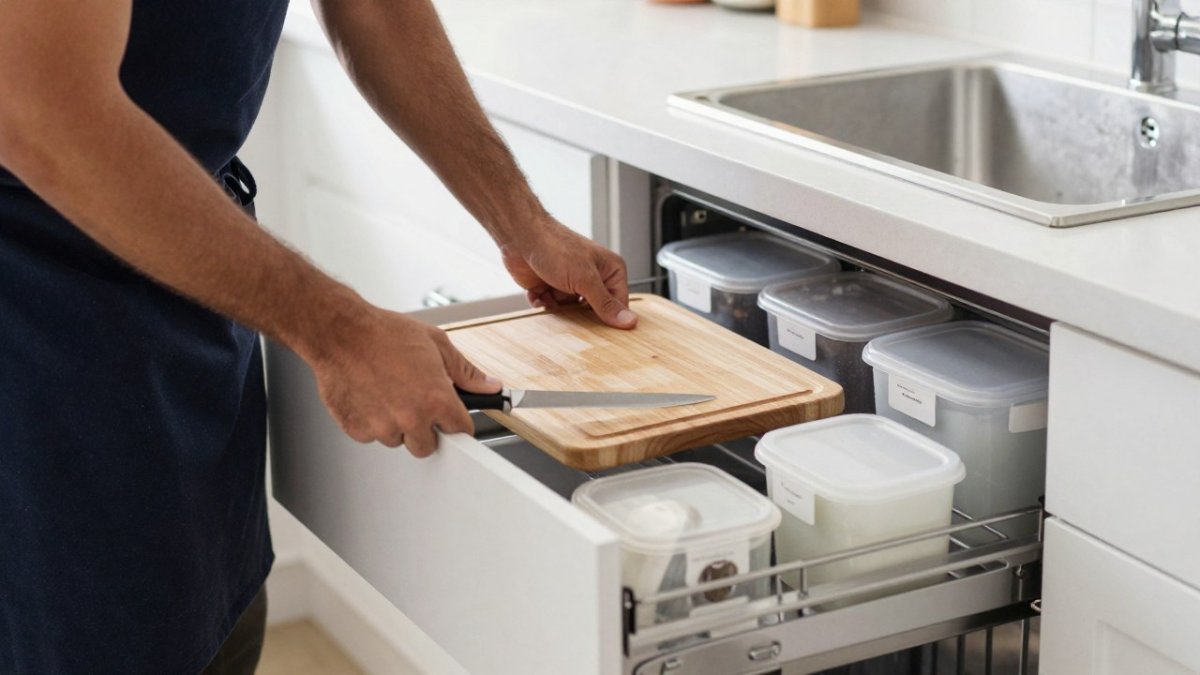
Smart storage cuts movement, and less movement means less fatigue. The rule is to store items at the point of first use. Knives go near the prep zone. Plates go near the dishwasher.
Accessible storage means no bending, stretching, or digging. Pull-out drawers and lazy Susans help, but so does simple grouping.
Where the Dishwasher and Appliances Belong
Dishwasher placement matters more than most people think. Put it next to the sink so scraping and loading happen in one motion. Keep the appliance placement close to where each item is used, not where it looks best.
- Dishwasher beside the sink in the cleaning zone
- Microwave near the fridge and prep area
- Coffee station on its own small counter
- Trash and recycling inside the cleaning zone
A work triangle with short legs and clear paths makes kitchen efficiency feel effortless.
Layered Lighting and Ergonomic Design for Easier Movement
Layered lighting means using three types of light together: overhead, task, and accent. Task lighting under cabinets lights the work surface so you can chop safely. Natural light lifts mood and reduces eye strain. Add a dimmer for evening meals.
How the Three Layers Actually Work
Overhead light fills the room but casts your shadow onto the counter when you stand at the prep zone. Task lighting fixes that by putting light between you and the work: under-cabinet strips over the prep zone, a brighter bulb over the sink and stove, and a focused light over the cutting board.
- Add under-cabinet task lighting over the prep zone
- Use brighter bulbs over the sink and stove
- Keep natural light windows unobstructed
- Put the overhead layer on a dimmer for evening meals
Watch out: a single bright overhead fixture aimed straight down creates glare on glossy counters and stainless steel, which is harder on the eyes than dim, even light. Diffused or angled task light reduces that glare.
Ergonomic Design: Reach, Height, and Movement
Ergonomic kitchen design reduces strain by keeping work inside a comfortable reach range. A common pattern is to store frequently used tools between shoulder and knee height so you rarely reach overhead or bend to the floor. Set counters at a height that lets you work with relaxed shoulders; if you are shorter or taller than average, a cutting board riser or an anti-fatigue mat adjusts the working height without remodeling.
- Store heavy pots low and light items high
- Keep daily tools between shoulder and knee height
- Place a mat where you stand to prep
- Keep the path between sink, stove, and fridge clear of stools and carts
Sensory and Accessibility Needs
Calm is not only visual. Noise from a running dishwasher, a loud exhaust fan, and clattering lids raises stress in a small room. Soft-close drawers, a rubber mat inside the silverware drawer, and running the dishwasher after meals rather than during prep cut the noise load.
Good lighting, easy movement, and lower sensory load make the cooking experience calmer and safer for more people, not just for those who can remodel.
Stress-Free Cooking Tips and Micro Habits for Daily Routines
Stress-free cooking tips work best as small habits, not big overhauls. Micro habits are tiny actions you repeat until they run on autopilot. They reduce kitchen stress without willpower.
Try these:
- Set out tools and ingredients before you start
- Practice mise en place so chopping vegetables is calm, not rushed
- Clean as you go to keep cleanup short
- Batch meal preparation on one day
- Keep a "too tired" backup meal ready
For nights when energy runs low, these ways to skip takeout when you are too tired to cook help you stay on track without a big effort.
Simple Meal Planning for Beginners to Beat Decision Fatigue
Simple meal planning for beginners removes the daily "what's for dinner" question.
Start small:
- Pick three dinners you can repeat each week
- Build a short healthy grocery list around them
- Prep ingredients once, then reuse them
- Leave one night open for leftovers or eating out
To cut the weekly friction, learn how to automate your grocery list. A solid healthy grocery list guide also makes shopping faster and calmer.
Dialed In can help with that decision. Point the camera at your fridge or pantry, and the app gives goal-based suggestions in real time.
Set Up Your Stress-Free Kitchen This Weekend
A stress-free kitchen is built in a weekend, then kept with small habits.
Dialed In analyzes menus, pantry items, and fridge contents on the spot. To keep overeating in check at home, see how to use AI to prevent overeating.
The kitchen should work for you, not against you. Dialed In makes the food side of that easier with real-time AI coaching, goal-based recommendations, and zero manual logging.
Frequently Asked Questions
What is the 3 kitchen rule?
The 3 kitchen rule is a simple tidying habit: before you leave the kitchen, reset three things, such as wiping the main counter, loading dishes into the dishwasher, and putting away ingredients. It takes a few minutes and stops clutter from building up overnight. The point is consistency rather than a deep clean. Done daily, it keeps a stress-free kitchen from sliding back into chaos, and it pairs well with the decluttering checklist in this guide.
What is the kitchen work triangle, and does it reduce stress?
The work triangle connects the sink, stove, and refrigerator. When those three points sit close together without cabinets or islands blocking the path, you walk less between prep, cooking, and cleanup. That reduced movement matters most during busy weeknights. In a small kitchen, keep the triangle tight; in an open layout, avoid placing the island between the three anchors. A layout that respects the triangle makes every stress-free cooking tip easier to follow.
How can I keep kitchen counters from getting cluttered?
Give every item on the counter a home somewhere else. Run the kitchen decluttering checklist: clear one section at a time, sort items into keep, relocate, and donate piles, then store only what you use weekly within reach. Appliances you use less than once a week can go in a cabinet or appliance garage. Finish by wiping the surface and returning just the essentials, like a knife block or coffee maker. Clear counters make food preparation faster and calmer.
How can I make meal planning feel less overwhelming?
Start with simple meal planning for beginners: pick three dinners you already know how to cook, shop for those ingredients, and leave the other nights flexible. Build from a short list of proteins, vegetables, and grains rather than a full recipe schedule. Keep the plan visible on the fridge so decisions are already made when you are tired. If choosing what to eat is the hard part, a tool like Dialed In can suggest options from your fridge or a restaurant menu in real time.