 Ultimate guide
How to Start Body Recomposition: A 2026 Guide
Table of Contents
- What Is Body Recomposition and Why It Matters
- How Body Recomposition Works: The Science Behind Simultaneous Fat Loss and Muscle Gain
- How to Hit Protein Goals Daily for Muscle Building
- Building Your Body Recomposition Workout Plan
- Nutrition Strategy: Caloric Maintenance and Macronutrient Balance
- How Long Does Body Recomposition Take?
- Sleep, Recovery, and Metabolic Adaptation
- Simplifying Nutrition Decisions Without Manual Tracking
What Is Body Recomposition and Why It Matters
Body recomposition is the simultaneous process of losing fat while building muscle, changing your body composition without necessarily changing the number on the scale. You're trading fat tissue for lean body mass, which improves your appearance, strength, and metabolic health.
Traditional weight loss often means losing both fat and muscle. Body recomposition is different: you're reshaping yourself from the inside out, building a stronger physique while shedding excess body fat. The scale might barely budge, but your body measurements, how your clothes fit, and your performance in the gym tell the real story.
You get the benefits of fat loss without the muscle sacrifice. Your basal metabolic rate stays higher because you're preserving and building metabolically active tissue. You feel stronger and look leaner. The psychological shift alone changes everything.
How Body Recomposition Works: The Science Behind Simultaneous Fat Loss and Muscle Gain
Body recomposition hinges on one key principle: your body can pull energy from stored fat while building new muscle tissue when the right conditions are met. When you maintain your current caloric intake while resistance training, your body enters a "caloric maintenance" state for overall energy balance. Simultaneously, the mechanical stress from strength training triggers protein synthesis, signaling your body to build muscle. Your body preferentially uses stored fat as fuel for this anabolic process, especially if protein intake is adequate.
The process requires three simultaneous conditions: consistent resistance training that creates progressive overload, adequate protein intake to support muscle protein synthesis, and sufficient recovery time between sessions. Miss any of these, and the effect diminishes dramatically.
As you lose fat, your body adjusts hormonal signaling and energy expenditure. This is why tracking progress beyond the scale becomes critical, your body weight might stabilize while your body fat percentage continues dropping and your strength increases. Most people see visible changes within 8 to 12 weeks of consistent training and nutrition, though the process continues for months. Lean body mass accumulation is gradual by design, but the fat loss offsets this, creating a visible transformation over time.
How to Hit Protein Goals Daily for Muscle Building
Protein Intake Requirements for Recomposition
Protein is non-negotiable for body recomposition. The standard recommendation is approximately 0.7 to 1.0 grams of protein per pound of body weight daily (peer-reviewed research). For a 180-pound person, that's 126 to 180 grams per day. This range supports muscle protein synthesis while accommodating individual variation in training intensity and recovery.
Protein helps preserve muscle during fat loss while supporting the growth stimulus from training. Without sufficient protein, your body catabolizes muscle tissue for energy, defeating the entire purpose of recomposition. Consuming protein throughout the day matters more than hitting a specific window. Aim to distribute your protein intake across three to four meals, aiming for 30 to 40 grams per meal.
Practical Strategies for Meeting Daily Protein Targets
The simplest approach is building meals around a protein source: chicken breast, ground beef, fish, eggs, Greek yogurt, cottage cheese, and legumes. One chicken breast provides roughly 35 grams of protein. Two eggs provide about 12 grams. A cup of Greek yogurt provides 15 to 20 grams.
Restaurant eating presents a real challenge. Many dishes are protein-light relative to calories. Dialed In's real-time food coaching analyzes any restaurant menu and identifies protein-rich options that fit your goals, eliminating the guesswork of what to order.
Practical strategies for consistency:
- Batch cook protein sources on Sunday for grab-and-go options throughout the week.
- Add protein powder to breakfast, adding 25 grams without changing the meal structure.
- Snack on high-protein foods like string cheese, beef jerky, and hard-boiled eggs.
- Use canned fish for shelf-stable, affordable protein delivering 20+ grams per can.
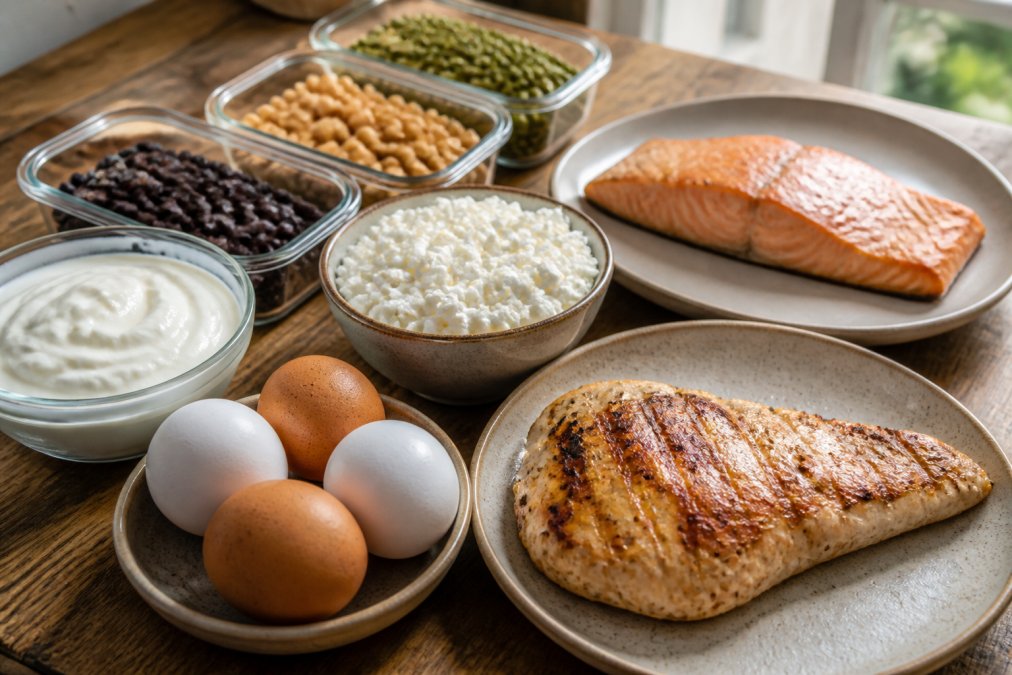
The most important factor is removing friction from the decision. Dialed In removes this friction by providing instant recommendations based on what's in front of you, your refrigerator, pantry, or restaurant menu. No manual logging. No spreadsheets. Just immediate guidance aligned with your protein and body recomposition goals.
Building Your Body Recomposition Workout Plan
Progressive Overload and Compound Movements
Your workout plan must center on compound movements: squats, deadlifts, bench presses, rows, and overhead presses. These movements create the mechanical tension necessary to trigger muscle protein synthesis and drive fat oxidation when combined with appropriate nutrition.
Progressive overload is the mechanism that forces adaptation. You don't repeat the same workout indefinitely. Each week, you increase weight, reps, or sets. A practical approach is adding five pounds to compound lifts each week, or adding one to two reps to your target range. Once you hit your target rep range, you increase weight and drop back to your starting rep count. This cycle continues indefinitely, driving continuous adaptation.

Training Frequency, Volume, and Recovery
Most people see results training each major muscle group two times per week. This frequency allows sufficient volume while permitting adequate recovery time between sessions. A typical split might be: Monday upper body, Tuesday lower body, Thursday upper body, Friday lower body.
Volume matters more than intensity alone. For body recomposition, aim for rep ranges of six to twelve repetitions per set, performing three to four sets per exercise. This range optimizes the balance between mechanical tension and metabolic stress.
Recovery is where adaptation actually happens. Your muscles don't grow in the gym; they grow when you rest. Sleep quality and duration directly influence muscle protein synthesis and recovery capacity. Aim for seven to nine hours of consistent sleep. Rest intervals between sets also matter: two to three minutes for compound movements, one to two minutes for isolation exercises.
Nutrition Strategy: Caloric Maintenance and Macronutrient Balance
Why Caloric Maintenance Works for Body Recomposition
Caloric maintenance, consuming roughly the same calories you burn daily, is the nutritional foundation for body recomposition. This differs from a caloric deficit used for pure fat loss or a surplus used for pure muscle gain. Maintenance allows your body to preserve metabolic rate while simultaneously shifting fuel sources.
When you're in a deficit, your body conserves energy and reduces non-essential processes, making muscle building harder. When you're in a surplus, you build muscle efficiently but also accumulate excess fat. Maintenance threads the needle: your total energy balance remains neutral, but your body composition shifts because resistance training directs calories toward muscle building while your stored fat provides the energy for fat oxidation.
The practical challenge is identifying your actual maintenance calories. Track your current weight and food intake for two weeks. If your weight remains stable, you've found maintenance. If you're gaining, reduce intake by 200 to 300 calories. If you're losing, increase intake by the same amount.
Tracking Progress Beyond the Scale
The scale is a poor metric for body recomposition because muscle is denser than fat. You might lose five pounds of fat and gain five pounds of muscle, and the scale shows zero change.
Real progress tracking includes body measurements, body fat percentage, and performance metrics. Measure your chest, arms, waist, and legs every two weeks. A decreasing waist measurement combined with stable or increasing arm measurements indicates successful recomposition. Body fat percentage, measured through skinfold calipers or bioelectrical impedance, directly tracks composition change. If you're lifting heavier weights for the same reps, your body is getting stronger, indicating muscle gain.
Take progress photos every two weeks under consistent lighting. These photos reveal changes invisible on the scale. Your face becomes leaner. Your midsection tightens. Your shoulders appear wider.
Macronutrient balance extends beyond protein. Carbohydrates fuel your training and recovery. Fat supports hormone production and nutrient absorption. A rough target is 40 percent protein, 35 percent carbohydrates, and 25 percent fat of your total calories. Pick a ratio that you can maintain, and adjust only if performance or body composition stalls for three to four weeks.
How Long Does Body Recomposition Take?
Visible body recomposition typically requires eight to twelve weeks of consistent training and nutrition. However, the process continues far longer than this initial window.
The rate of change depends on several factors. Training experience matters significantly. Beginners see faster initial changes because their bodies are highly responsive to the novel stimulus of resistance training. Advanced lifters progress more slowly because they're already adapted to training stress.
Your starting point influences timeline too. Someone with higher body fat percentage typically sees faster visual changes in the first three months. Someone already lean might see slower initial changes but more dramatic muscle definition as weeks progress.
Realistic expectations: expect one to two pounds of fat loss per week combined with gradual muscle gain. After eight weeks, you might see eight to sixteen pounds of fat loss offset by four to eight pounds of muscle gain, resulting in a net weight change of four to twelve pounds despite a dramatic body composition shift.
Body recomposition isn't a phase you complete and then stop. It's a sustainable approach to body composition management. Many people continue this approach indefinitely because it doesn't require the severe restriction of cutting phases or the relentless eating of bulking phases.
Sleep, Recovery, and Metabolic Adaptation
Sleep directly influences your capacity for body recomposition. During sleep, your body releases growth hormone, consolidates muscle protein synthesis, and regulates hunger hormones. Poor sleep undermines all three. When sleep is insufficient, cortisol rises, which promotes fat storage and muscle breakdown.
Aim for seven to nine hours of consistent sleep in a cool, dark environment. Sleep quality matters as much as quantity. Irregular sleep schedules disrupt circadian rhythm and reduce sleep efficiency.
Recovery extends beyond sleep. Active recovery, light walking, yoga, or mobility work on rest days improves blood flow and reduces soreness without creating additional training stress. Stress management matters too. High chronic stress elevates cortisol, promoting fat storage and muscle catabolism.
Metabolic adaptation is the body's gradual adjustment to your current caloric intake and training stimulus. Over weeks, your body becomes more efficient at the activities you perform regularly. When progress stalls despite consistent effort, increase training volume slightly or adjust macronutrients. A small change often restarts progress.
Simplifying Nutrition Decisions Without Manual Tracking
Manual calorie and macro tracking works, but it's friction-heavy. Most people abandon this approach within weeks because it's tedious and requires constant vigilance.
Dialed In eliminates this friction entirely. Instead of logging, you point your camera at your food. The AI analyzes the meal and provides instant recommendations aligned with your body recomposition goals. Whether you're at home, at a restaurant, or grabbing something quick, Dialed In gives you personalized guidance in real time.
The app works without manual logging because it understands your goals and evaluates options against those goals. No account creation required. No onboarding. Just immediate, actionable recommendations. This removes the decision paralysis that derails most people.
For someone serious about body recomposition, this is transformative. You maintain caloric balance and hit protein targets without the spreadsheet management. You make smarter choices at restaurants without second-guessing yourself. You stay consistent because consistency doesn't require constant mental effort.
| Element | Target | Frequency | Impact |
|---|---|---|---|
| Protein intake | 0.7-1.0g per lb body weight | Daily | Supports muscle protein synthesis |
| Strength training | 2x per muscle group | Weekly | Drives progressive overload |
| Sleep | 7-9 hours | Nightly | Enables recovery and adaptation |
| Caloric maintenance | Stable body weight | Daily | Allows composition shift without scale change |
| Progress tracking | Measurements, photos, performance | Bi-weekly | Reveals changes the scale misses |
Body recomposition is achievable when you remove the friction from decision-making and stay consistent with training and nutrition. Most people fail not because the process is complicated, but because they can't maintain the daily decisions required. Dialed In's real-time AI coaching simplifies these decisions by analyzing any food source and providing personalized recommendations aligned with your specific goals. With guidance that meets you where you eat, restaurants, home, or on the go, you stay on track without manual tracking, spreadsheets, or the guesswork that derails most attempts. Research on protein intake and muscle synthesis confirms that adequate protein combined with resistance training drives muscle protein synthesis even during fat loss. Studies on sleep and body composition show that seven to nine hours of quality sleep directly improves recovery and metabolic adaptation. Start your body recomposition today with Dialed In and claim your founder spot to access personalized nutrition coaching that works with your actual eating patterns, not against them.
Frequently Asked Questions
Q: How long does it take for body recomposition to start showing results?
A: Most people notice visible changes within 4 to 8 weeks of consistent training and proper nutrition. Body recomposition works by simultaneously building lean body mass while reducing body fat percentage, so scale weight may not change dramatically. Measuring body composition through progress photos, clothing fit, and body measurements provides more accurate feedback than the scale alone. Results depend on training intensity, protein intake, caloric maintenance, and recovery quality.
Q: How much protein do I need daily for body recomposition?
A: Aim for 0.8 to 1 gram of protein per pound of target body weight to support muscle protein synthesis and hypertrophy. This ensures your body has sufficient amino acids for recovery and lean body mass development. If you weigh 180 pounds, target 144 to 180 grams daily. Spreading protein intake across meals optimizes muscle protein synthesis throughout the day, making consistent daily intake crucial for recomposition success.
Q: Can I achieve body recomposition without being in a calorie deficit?
A: Yes, body recomposition thrives at caloric maintenance, where calorie intake matches calorie expenditure. This allows your body to enter an anabolic state for muscle building while simultaneously losing fat through strength training and proper protein intake. A caloric deficit slows muscle gain; a surplus typically increases fat gain. Caloric maintenance, combined with progressive overload and adequate protein, creates the ideal environment for simultaneous fat loss and muscle gain.
Q: What's the best workout structure for body recomposition?
A: Focus on compound movements (squats, deadlifts, bench press) performed 3 to 4 times weekly with progressive overload. Each session should target major muscle groups with moderate to high intensity and sufficient volume. Rest intervals of 60 to 90 seconds between sets support both strength and hypertrophy. Recovery time between sessions is essential, aim for 48 hours before training the same muscle group. This frequency and intensity balance maximizes muscle tissue adaptation while allowing fat oxidation to occur.
Q: How is body recomposition different from just losing weight?
A: Weight loss often includes muscle tissue loss alongside fat loss, lowering your basal metabolic rate and making future weight management harder. Body recomposition preserves and builds lean body mass while reducing body fat percentage, improving body composition without sacrificing muscle. This approach is more sustainable long-term because muscle tissue supports higher metabolic activity and strength. The result is a leaner, stronger physique rather than simply a lighter one.
Q: Do I need special equipment or a gym membership to start body recomposition?
A: No. While barbells and dumbbells accelerate progress through progressive overload, bodyweight exercises (push-ups, pull-ups, squats, lunges) effectively build muscle and support body recomposition. Home-based protocols using resistance bands or minimal equipment work well for beginners. The key is consistent training with adequate intensity and proper nutrition. Equipment-free approaches take longer to show results but remain effective when combined with proper protein intake and caloric maintenance.
Q: How do I track body recomposition progress if I'm not counting calories?
A: Track body composition through progress photos taken monthly, body measurements (chest, waist, arms, thighs), and how clothing fits. Bioelectrical impedance scales or skinfold calipers estimate body fat percentage changes. Strength gains in the gym, increasing reps, weight, or intensity, directly indicate muscle tissue development. These metrics reveal recomposition success far better than scale weight alone, which fluctuates due to water retention, glycogen storage, and non-exercise activity thermogenesis.
Q: Can I eat out frequently while doing body recomposition?
A: Yes. Restaurant meals can support body recomposition when you prioritize protein and maintain caloric maintenance. Most restaurants offer grilled proteins, vegetables, and whole grains. The challenge is identifying macronutrient content without manual logging. Real-time AI food coaching tools can analyze restaurant menus and dishes instantly, providing personalized recommendations aligned with your body recomposition goals, eliminating guesswork about whether a meal supports your progress.
This article was written using GrandRanker