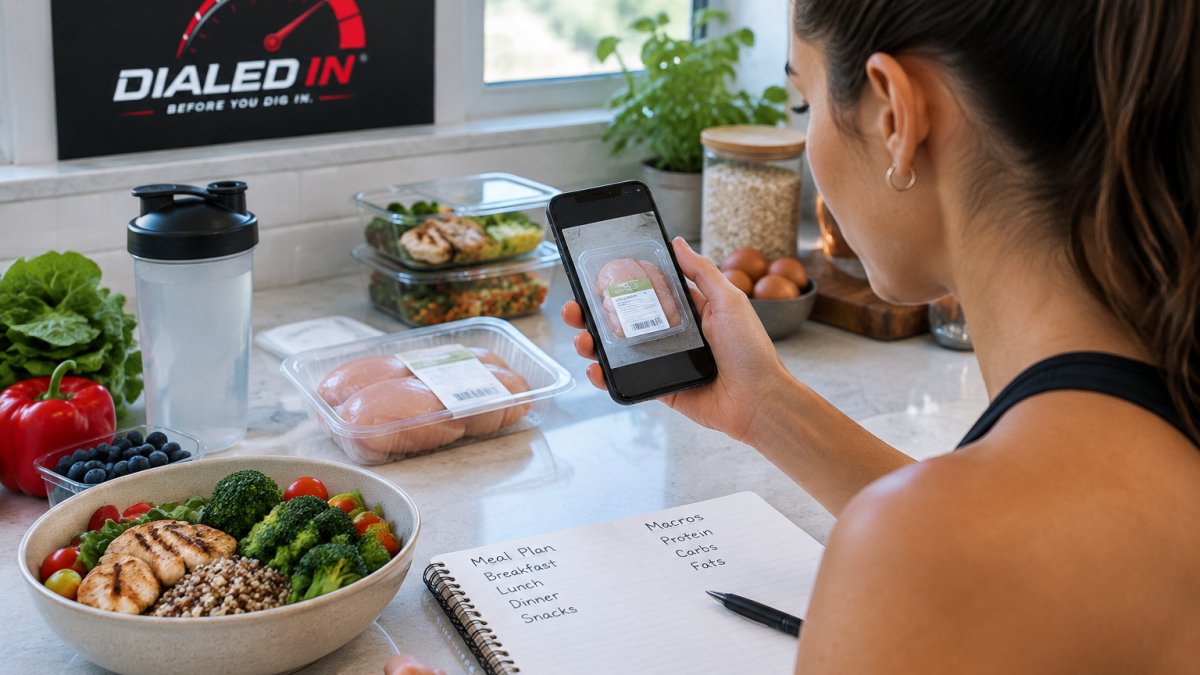
 How-to
Is Macro Tracking Necessary for Muscle Gain?
Last Updated: October 27, 2026
Quick Summary
No, macro tracking is not necessary for muscle gain. Building muscle depends on enough total calories, enough protein, and consistent strength training, and tracking macros is only one way to hit those targets. Many people build lean mass for years without logging a single meal.
- A common protein target is roughly 0.7 to 1 gram per pound of body weight daily for regular lifters.
- A small calorie surplus of about 200 to 300 calories above maintenance works best for muscle gain.
- The hand-portion method controls protein, carbs, vegetables, and fats without a food scale or app.
- Beginners who track should start with protein and calories only, adding carbs and fats last.
- Judge your intake over four to six weeks by strength, weight trend, and how clothes fit.
Table of Contents
- Is Macro Tracking Necessary for Muscle Gain?
- How Much Protein to Build Muscle
- Setting a Calorie Surplus for Muscle Gain
- How to Gain Muscle Without Tracking Macros
- Macro Tracking for Beginners: A Simple Starting Point
- When Tracking Backfires: Burden, Errors, and Disordered Eating Risk
- How to Tell If Your Intake Is Working and When to Adjust
- Get Personalized Food Decisions Without the Spreadsheet
- Frequently Asked Questions
Is Macro Tracking Necessary for Muscle Gain?
No, macro tracking is not necessary for muscle gain. Building muscle depends on three things: enough total calories, enough protein, and consistent strength training.
Muscle growth follows energy balance and recovery, not spreadsheet precision. Many people build lean mass for years without logging a single meal. Others track closely and still stall, because their targets were wrong or their training was not challenging enough.
What Macro Tracking Actually Measures
Macro tracking is the practice of logging the protein, carbohydrates, and fat in everything you eat and comparing the totals to daily targets. It measures intake, not results.
That distinction matters. A food log tells you what went in. It says nothing about how your body responded.
The three macronutrients do different jobs:
- Protein supplies the amino acids used to repair and build muscle tissue
- Carbohydrates refill glycogen and fuel hard training sessions
- Dietary fat supports hormone production and overall health
Calories sit above all three. Energy balance decides whether you gain or lose weight; the macro split decides what that weight is made of.
How Much Protein to Build Muscle
Protein is the one macro that genuinely decides muscle gain, and most people undereat it.
Spread that across three to four meals. A palm-sized portion of chicken, fish, eggs, Greek yogurt, or tofu at each meal gets most people close without weighing anything.
What most guides miss is that protein timing matters far less than the daily total. Hitting the number consistently beats perfectly timed shakes.
If you want the full breakdown of macro numbers for muscle gain, see how to calculate macros for muscle gain.
The protein target that drives muscle gain, and how to hit it without weighing food.
| Item | Value | Note |
|---|---|---|
| Daily protein target | 0.7 to 1 gram per pound of body weight | For people lifting regularly |
| 180-pound lifter | About 130 to 180 grams daily | Example of the target range |
| Meals per day | Three to four | Spread protein across them |
| Portion size | One palm-sized serving | Chicken, fish, eggs, Greek yogurt, or tofu |
| Priority | Daily total over timing | Timing matters far less than the daily total |
Setting a Calorie Surplus for Muscle Gain
A calorie surplus is eating slightly more than you burn, and it is the non-negotiable driver of muscle gain. A small surplus works best.
Bigger surpluses do not build muscle faster. They mostly add fat.
Watch out: guessing maintenance too high is the most common surplus error. If the scale climbs fast and the waistband tightens, the surplus is too large. Cut it back.
Track body weight two to three times per week and average the numbers. A slow, steady climb suggests the surplus is working.
How to Gain Muscle Without Tracking Macros
You can gain muscle without tracking macros by controlling portions, protein, and meal structure instead of numbers.
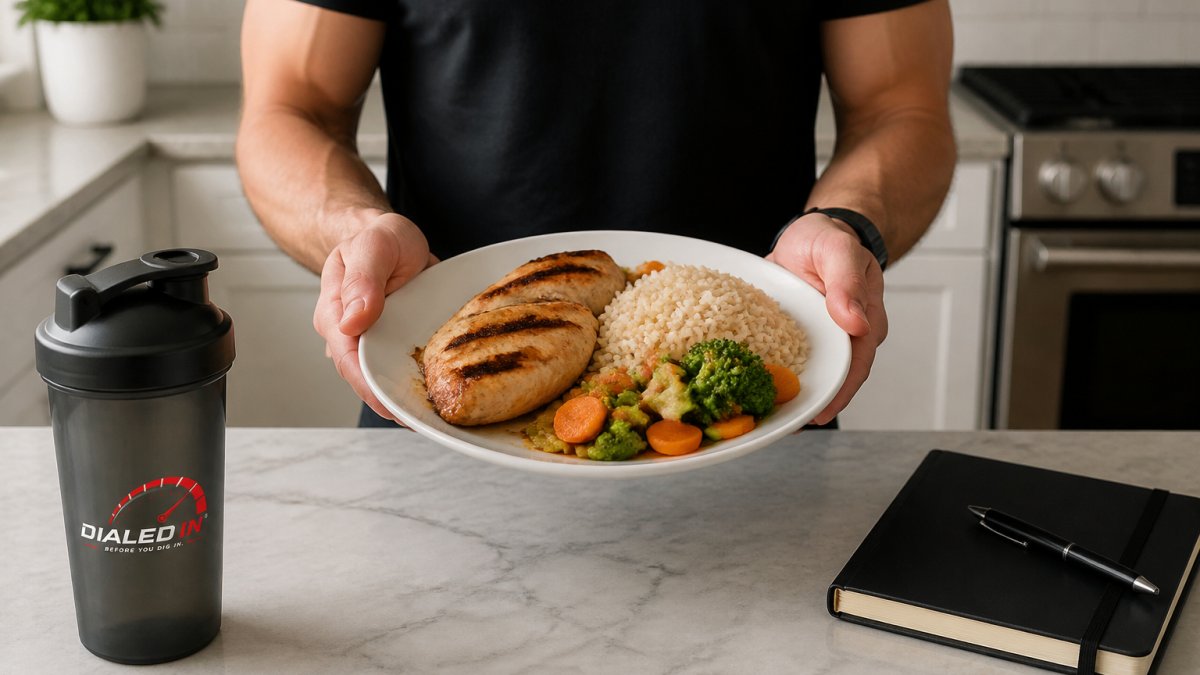
The hand-portion method is the simplest version:
- Protein: one palm-sized serving at every meal
- Carbohydrates: one cupped-hand serving around training
- Vegetables: one or two fist-sized servings per meal
- Fats: one thumb-sized serving of oils, nuts, or avocado
Build meals around protein first, then fill in carbs and fats. Keep a short list of go-to meals you can repeat. Consistency beats variety here.
Turn Portions Into a Repeatable Meal Template
The hand method only works if you apply it to the same meals most days. Pick three or four breakfasts, lunches, and dinners you can cook without thinking, and anchor each one to a palm of protein. A sample day looks like this:
- Breakfast: three eggs plus Greek yogurt with a thumb of nuts
- Lunch: palm of chicken, cupped hand of rice, fist of vegetables
- Pre-training: a cupped hand of carbs plus a palm of protein
- Dinner: palm of fish or tofu, cupped hand of potatoes, fist of vegetables
That structure lands most lifters in the range of 0.7 to 1 gram of protein per pound of body weight without a single entry in an app. A 180-pound lifter eating a palm of protein at four meals typically clears 130 grams.
Use Simple Progress Checks Instead of a Log
Without numbers, you need non-numeric feedback. Weigh yourself two to three times per week and average the readings. If the average climbs slowly and your strength on main lifts rises, the portions are working. If weight is flat for three weeks, add one extra cupped hand of carbs or one extra palm of protein per day. If the waistband tightens faster than your lifts improve, trim a thumb of fat or a cupped hand of carbs.
If you want a structured way to balance macros without counting, balance macros without counting calories walks through the full method.
Macro Tracking for Beginners: A Simple Starting Point
Beginners who want to track should start with protein and calories only, not all three macros. Adding carbs and fat targets on day one creates overload and early quitting.
A workable first month:
- Log meals for one week with no targets, just to see your baseline
- Set a daily protein target and hit it for two weeks
- Add a calorie target once protein feels automatic
- Split carbs and fats last, if at all
A common mistake is chasing perfect numbers. Hitting your targets within a reasonable range most days is enough.
If logging every meal feels like too much, track macros without logging shows a lower-effort option that still keeps you honest.
When Tracking Backfires: Burden, Errors, and Disordered Eating Risk
Tracking backfires when the log becomes the goal instead of the muscle.
The bigger risk is psychological. The National Eating Disorders Association offers screening resources and guidance on when food rules cross into harmful territory.
Errors are the other problem. Portion estimates drift, restaurant meals get logged loosely, and labels are not always accurate.
Watch out: if tracking makes you anxious, skip meals, or feel guilty over small misses, stop tracking. The tool should serve the goal, not the reverse.
How to Tell If Your Intake Is Working and When to Adjust
Judge your intake by outcomes over four to six weeks, not by daily numbers. If strength is climbing, body weight is trending up slowly, and your clothes fit similarly, the plan is working.
Know the Rate of Gain You Are Aiming For
A reasonable target for most lifters is roughly 0.25 to 0.5 percent of body weight per week. A 180-pound lifter is therefore looking for about 0.5 to 1 pound per week. Beginners and younger lifters can sit at the top of that range; experienced lifters should stay near the bottom, because the body can only build so much lean tissue in a given window and the rest of a large surplus gets stored as fat.
That range is a guide, not a prescription. Someone returning after a layoff may gain faster for a few weeks; someone with years of training may need to accept slower scale movement to keep the gain lean.
Read the Trend, Not the Daily Number
Daily weight swings of two to four pounds are normal and come from food volume, sodium, carbohydrate intake, and hydration, not from muscle or fat gained overnight. Weigh yourself two to three times per week under similar conditions and compare weekly averages. A single high reading after a salty restaurant meal is noise.
Use three markers together:
- Body-weight trend: weekly average moving in the target range
- Strength: main lifts adding reps or load over four to six weeks
- Measurements and fit: waist stable while chest, arms, and thighs trend up
Adjust in the Right Order
When progress stalls, change one variable at a time and give it two to three weeks before judging.
- No weight change for three weeks: add roughly 100 to 200 calories per day, or one extra cupped hand of carbs around training
- Fast weight gain with a growing waist: trim the surplus slightly, starting with fats and carbs rather than protein
- Strength flat but weight rising: check protein intake and training intensity before cutting calories, because the problem is often recovery or programming, not food
- Weight rising but waist shrinking: this is a favorable recomposition pattern; hold the course
Non-scale markers matter too. Progress photos, lift numbers, and how clothes fit often tell the story before the scale does. For a deeper look, track body recomposition progress without a scale covers the full set of markers.
Get Personalized Food Decisions Without the Spreadsheet
Nutrition decisions happen in real time, at restaurants and in kitchens, where people may not want to open a logging app.
Dialed In is a real-time AI food decision coach built for exactly that moment. Point your camera at a menu, a plate, or the inside of your fridge, and the app gives personalized recommendations based on your goal, whether that is building muscle, losing fat, or maintaining weight.
For anyone weighing a coach against a plain tracker, AI nutrition coach vs calorie tracker explains the difference.
Frequently Asked Questions
Do you need to track macros to build muscle?
No. Muscle growth depends on eating enough calories, hitting a protein target, and training hard consistently. Macro tracking is one way to hit those targets, not a requirement. People who eat similar meals most days, or who use hand-portion estimates and check progress every few weeks, can build muscle without logging a single food. Tracking helps most when progress stalls and you need to find out why, or when your meals vary a lot day to day.
How much protein do I need to build muscle without tracking macros?
A common research-backed target is roughly 0.7 to 1 gram of protein per pound of body weight per day for people lifting regularly. For a 180-pound person, that is about 125 to 180 grams. Without tracking, anchor each meal with a palm-sized portion of a protein-rich food: chicken, fish, eggs, Greek yogurt, cottage cheese, tofu, or lean beef. Three to four such meals per day usually lands you in range without any logging.
Can you gain muscle without counting calories or macros?
Yes, if you control a few variables. Eat three to four meals a day with a protein source at each, add a modest amount of extra food (a snack or a slightly larger serving) to support a small calorie surplus for muscle gain, and weigh yourself weekly. If your weight is flat for three to four weeks while you are getting stronger, add a little more food. If it climbs faster than about 1 pound per week, pull back slightly. That feedback loop replaces calorie counting.
Is macro tracking better than calorie counting for muscle gain?
They answer different questions. Calorie tracking controls total intake, which drives weight change. Macro tracking adds the protein, carbohydrate, and fat breakdown, which affects muscle retention, training energy, and recovery. For muscle gain, protein is the macro that matters most, so tracking calories alone can leave you short on protein. Many people do best with a middle path: track protein loosely, keep calories roughly stable, and skip the rest.
Building muscle without tracking is entirely possible, but it takes a system for making good food choices in the moment, not just knowledge of the targets. Dialed In turns those targets into real-time guidance: camera-based food analysis, goal-specific recommendations for muscle gain or fat loss, and zero manual logging. Get started with Dialed In and make every meal decision move you closer to your goal.