 How-to
How Can You Minimize Food Waste in Fitness Meal Prep?
Last Updated: October 26, 2026
Quick Summary
To minimize food waste meal prep, start by inventorying what you have, plan meals around existing ingredients, and use a structured grocery list template to buy only what fits your plan. Proper storage with clear eat-by dates, freezing single-serving portions, and rotating frozen meals into your weekly plan extend freshness and prevent spoilage.
- Cooked proteins and mixed meals last three to four days in the refrigerator; cooked grains last about five days.
- Store pre-portioned containers matching your calorie and protein targets rather than large batches you dip into all week.
- Freeze single-serving portions in goal-sized amounts that thaw faster and let you mix and match to hit macros.
- Organize containers with oldest meals in front and newest in back to ensure first-in, first-out rotation.
- Track discarded food for one week to identify patterns like expired produce or forgotten containers, then adjust quantities and recipes accordingly.
Table of Contents
- Start With a Complete Food Inventory
- Plan Your Weekly Meals Around What You Have
- Build a Meal Prep Grocery List Template That Prevents Overbuying
- How to Store Meal-Prepped Food for Maximum Freshness
- Freezing Meal-Prep Meals to Extend Shelf Life
- Using Leftovers in Meal Prep for Maximum Ingredient Reuse
- Track Your Waste and Adjust Your Prep Strategy
- Start Your Waste-Free Meal Prep This Week
- Frequently Asked Questions
Start With a Complete Food Inventory
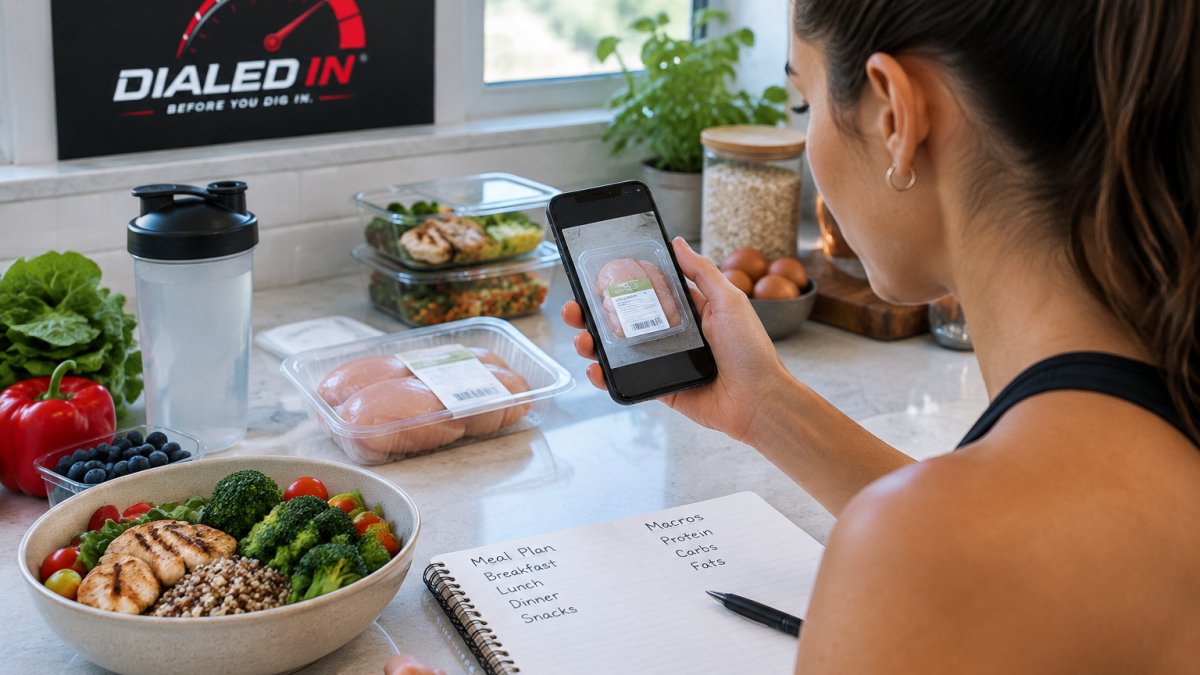
The first step to minimize food waste meal prep is knowing what you have. A complete inventory can help you plan around existing ingredients.
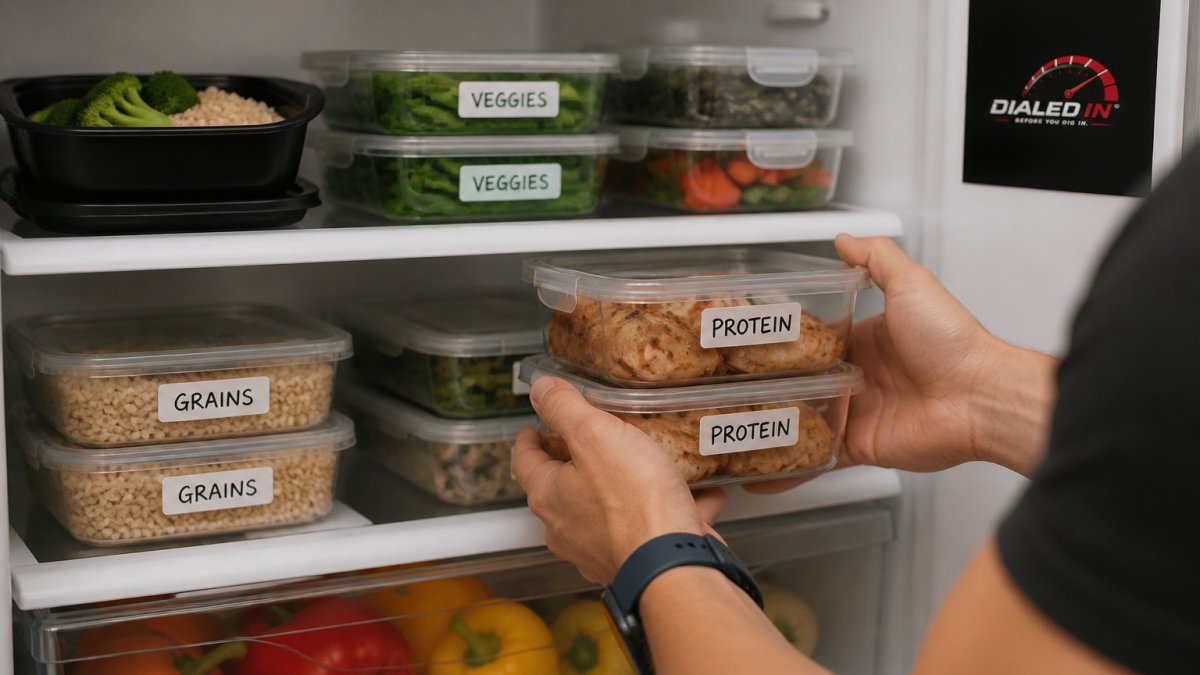
Check your refrigerator, freezer, and pantry, writing down everything, proteins, vegetables, grains, sauces, condiments, with quantities and expiration dates. Prioritize perishables like dairy and fresh produce, which spoil fastest.
Once you know what's on hand, build meals around existing inventory instead of starting from scratch.
The inventory also reveals patterns: ingredients that always go bad should be bought in smaller quantities, and surplus should go into this week's meals.
Plan Your Weekly Meals Around What You Have
Once you've inventoried what's available, design your weekly meal plan around those ingredients so they get used before spoiling and you need fewer shopping trips.
Start by identifying proteins you need to use soon. If you have chicken breasts expiring in three days, plan at least two meals around chicken this week.
Next, build meals that reuse ingredients across recipes.
USDA food storage guidelines recommend checking expiration dates and planning meals accordingly. This can help you plan meals around food you already have.
Planning this way also helps hit fitness targets: plan around high-protein ingredients you already own to ensure each meal includes adequate anchor words, or portion intentionally based on what needs to be used for fat loss.
Build a Meal Prep Grocery List Template That Prevents Overbuying
A structured grocery list template prevents overbuying and ensures you purchase only what fits your meal plan. Start by listing meals planned for the week, then work backward to identify missing ingredients.
Create a template with these columns:
| Meal | Protein Needed | Vegetables | Grains/Carbs | Quantity |
|---|---|---|---|---|
| Monday Lunch | Chicken breast | Broccoli | Brown rice | 6 oz / 1 cup |
| Tuesday Dinner | Ground turkey | Bell peppers | Sweet potato | 5 oz / 1 medium |
This template forces you to specify exact quantities before shopping. Writing "chicken" might mean buying three pounds; writing "chicken breast, 1.5 lbs for four meals" means buying the right amount.
Before shopping, cross-reference your inventory against the template. If you already have brown rice, don't buy more. This step helps you check what you already own before shopping.
Use your template to guide package selection.
Academy of Nutrition and Dietetics portion size recommendations suggest planning portions based on your specific goals. An anchor words can help automate this process so you're buying the exact quantities your goals require.
How to Store Meal-Prepped Food for Maximum Freshness
Proper storage is where most fitness meal-prep waste happens: you cook the right portions, then lose half to the back of the refrigerator. Temperature, containers, cooling speed, and organization determine whether Sunday's prep is still safe and appetizing on Thursday.
Cool Fast, Then Refrigerate
The most common mistake is putting a large, hot batch straight into the refrigerator, where a big pot of chili or full sheet pan traps heat in the center and keeps food in the temperature danger zone (40°F to 140°F), where bacteria multiply fastest. Split batches into shallow containers, leave headroom, and refrigerate within two hours of cooking.
Use Refrigeration Timelines, Not Guesswork
Cooked food doesn't last indefinitely in the refrigerator. Eat cooked proteins and mixed meals within three to four days and cooked grains within about five; leafy greens wilt fastest while broccoli, carrots, and bell peppers hold longer. Cook or freeze raw poultry and ground meat within one to two days of purchase. Write the prep date on every container.
Store Raw and Cooked Separately
Keep raw proteins on the bottom shelf so drips fall only on the shelf, not ready-to-eat food below. Use a dedicated shelf or bin for raw chicken, turkey, and beef, basic cross-contamination control that matters more when you store several proteins at once.
Organize by Eat-By Date, Not by Meal Type
Arrange containers with the oldest meals in front and the newest in back. If you prep five lunches Sunday, keep Monday's and Tuesday's at eye level and push the rest to the back.
Portion for Your Goals, Not the Package
Storage and portioning are the same decision. If your plan calls for 6 oz of cooked chicken per lunch, store 6 oz portions rather than one large container you dip into all week. Pre-portioned containers are easier to grab, track against calorie and protein targets, and less likely to be abandoned half-eaten.
Choose Containers That Survive the Week
Airtight glass resists odors and stains; plastic works but degrades faster and can warp in the microwave. Whatever you choose, make sure lids seal fully, a loose lid lets air in, dries out proteins, and speeds spoilage. Label the lid so you can read the date without pulling every container out.
USDA food storage guidelines are a useful reference for specific refrigerator and freezer timelines when you're storing something outside your usual rotation.
Freezing Meal-Prep Meals to Extend Shelf Life
Freezing is the most reliable way to stop fitness meal prep from becoming wasted food, but only if you freeze the right things in the right portions. A freezer of unlabeled, oversized containers is just delayed waste. Aim for a rotating stock of single-serving meals that match your calorie and protein targets and thaw quickly enough that you'll eat them.
What Freezes Well and What Doesn't
Cooked proteins, chicken, turkey, beef, and most fish, freeze reliably, though fish is best within a month or two. Cooked rice and quinoa freeze without noticeable loss, and roasted vegetables hold up far better than raw or steamed ones, which turn watery. Soups, stews, chili, and curries freeze especially well.
Some things don't freeze well: raw leafy greens, cucumbers, and other high-water vegetables become limp; dairy-based sauces can separate; and potatoes can turn grainy in some preparations. If you're building freezer meals around a macro target, freeze the components that hold up and add fresh elements at serving time.
Freeze in Single-Serving, Goal-Sized Portions
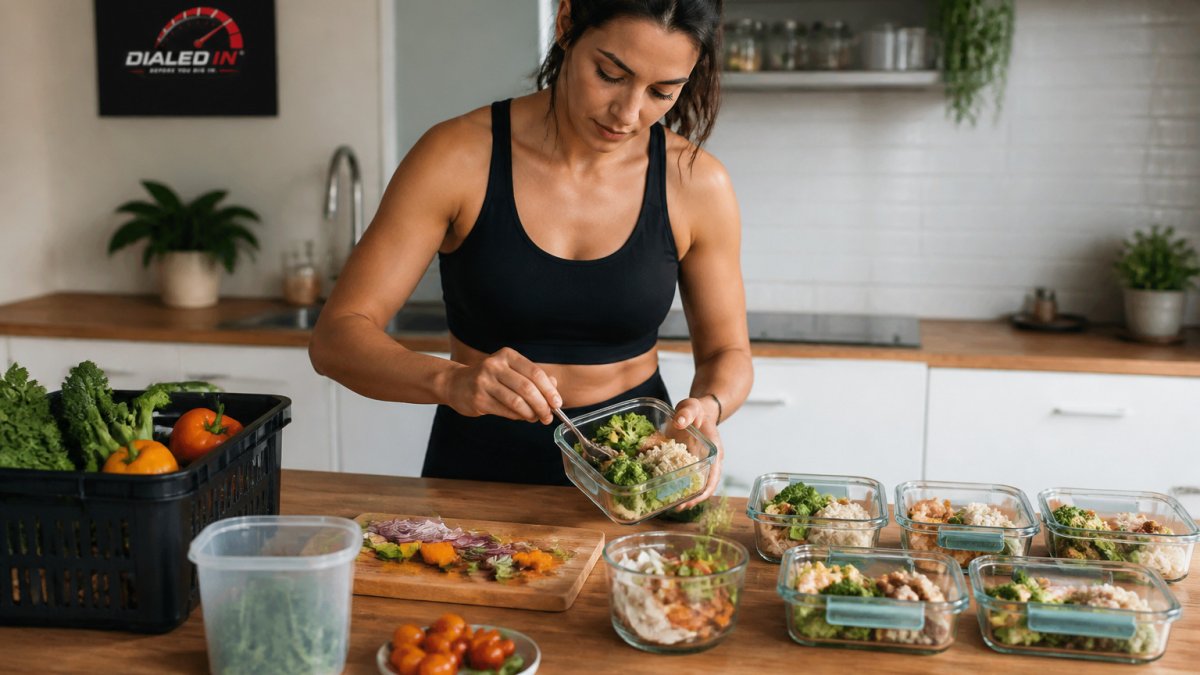
Freeze in portions that match one meal in your plan, not family-sized batches. A 6 oz chicken portion, 1-cup rice portion, and cup of roasted vegetables each freeze and thaw faster than a combined container and let you mix and match to hit macros.
Use freezer-safe containers or heavy-duty freezer bags, press out as much air as possible, and leave a little headroom for expansion. Flat-freeze bags of soup or chili on a sheet pan before stacking; they thaw faster and store more efficiently.
Label and Date Everything
Write the contents and date on every container. An unlabeled container is one you'll buy around instead of eat. A simple inventory list on the freezer door, what's in there and when it was frozen, turns the freezer into a usable part of your meal plan rather than a graveyard.
Thaw Safely, Not on the Counter
Thaw frozen meals in the refrigerator overnight, in the microwave on defrost, or as part of cooking, never on the counter, where the 40°F to 140°F danger zone lets bacteria multiply fastest. Plan ahead so thawing happens in the refrigerator, reheat promptly, and follow the same three-to-four-day window once thawed.
Rotate Frozen Meals Into Your Weekly Plan
Freezing only reduces waste if frozen meals come back out. Build one or two freezer meals into each week's plan, say, a Thursday dinner from a batch frozen two weeks ago, and use first-in, first-out: eat the oldest before adding new ones. This keeps quality high and prevents food from quietly expiring.
Match Freezing to Your Training Calendar
If a heavy training or travel week is coming, freeze extra portions in advance rather than letting fresh food spoil while you're away; during weeks you'll be home cooking, freeze less and eat fresh. Aligning freezing with your actual schedule is the difference between a freezer that supports your goals and one that hides wasted food.
Using Leftovers in Meal Prep for Maximum Ingredient Reuse
Build recipes that intentionally create usable leftovers and repurpose ingredients across multiple dishes.
Cook proteins in bulk and use them in different meals throughout the week. Roasted chicken works in salads, grain bowls, wraps, and stir-fries.
Roasted vegetables also work across meals. Roasted broccoli works as a side dish, in grain bowls, or chopped into omelets.
Save vegetable scraps for broth. Carrot tops, celery ends, and onion skins can be simmered with water to make broth.
The anchor words shows how high-protein ingredients can be repurposed across multiple meal types.
Track Your Waste and Adjust Your Prep Strategy
You can track discarded food to look for patterns.
For one week, write down every food item you throw away, spoiled produce, unused proteins, forgotten containers, partially eaten meals, and note the reason: expired, forgot about it, didn't like it, made too much.
After one week, review your notes for recurring reasons food was discarded.
Adjust accordingly: buy smaller quantities of greens or switch to heartier vegetables like broccoli and carrots, reduce protein batch sizes, and replace uneaten meals with recipes you actually enjoy.
Track discarded food weekly for one month.
Start Your Waste-Free Meal Prep This Week
Minimizing food waste in fitness meal prep starts with three actions: inventory what you have, plan meals around existing ingredients, and organize storage. These actions can help you plan meals around what you have.
This week, spend 15 minutes checking your refrigerator and pantry, write down the proteins, vegetables, and grains you have, design three meals around them, and buy only what's missing. Compare the cost-effectiveness of home cooking versus meal plans to understand how waste reduction affects your budget.
This approach helps you plan meals around ingredients you already have. Dialed In simplifies the process by analyzing what you have and recommending meals that fit your fitness goals, fat loss, muscle building, or maintenance.
Dialed In provides real-time recommendations based on your refrigerator contents and fitness goals. You can point your camera at what you have to get personalized meal suggestions.
Frequently Asked Questions
How can I reduce food waste when meal prepping?
Start by taking inventory of what you already have, then plan meals that use overlapping ingredients across multiple recipes. Buy only the quantities you'll use within the week, portion ingredients intentionally, and freeze items you won't eat fresh. Track what you discard each week to identify patterns, if you're throwing away wilted greens, buy smaller amounts or use them in soups and smoothies first.
How long can meal-prepped food stay in the refrigerator?
Most cooked proteins and vegetables last 3-4 days when stored in airtight containers at 40°F or below. Grains like rice and quinoa stay fresh for 5 days. Raw prepped vegetables (chopped but uncooked) last 2-3 days. Check food for off odors or discoloration before eating. If you're prepping for the entire week, freeze portions on day 3 or 4 to extend freshness and prevent spoilage.
Can I freeze meal-prepped food to prevent waste?
Yes. Cooked proteins, grains, and most vegetables freeze well for up to 3 months. Use freezer-safe containers or bags, label with the date, and thaw overnight in the refrigerator. Avoid freezing high-water-content items like leafy greens or tomatoes unless they're cooked into a dish. Freezing extends your prep window significantly, prep for two weeks, freeze half, and thaw as needed to minimize daily waste.
How do I use leftover ingredients in another high-protein meal?
Plan recipes with overlapping ingredients from the start. If you buy chicken for grilled breasts, use the same protein in a stir-fry or salad later in the week. Roasted vegetables work in grain bowls, wraps, or omelets. Cooked grains become bases for multiple dishes. Keep a running list of versatile ingredients, eggs, canned beans, frozen vegetables, and plain Greek yogurt work across dozens of meals.