 How-to
How to Track Macros for Beginners Without Burnout
Last Updated: November 16, 2026
Quick Summary
Tracking macros gives beginners structure: you log protein, carbohydrates, and fat against daily targets, so you learn what real portions look like and how food choices add up. Protein matters most, so hit that target first and adjust carbs and fat later.
- Log everything for two days without changing anything, then add a protein source to each meal.
- Two macro calculators often disagree by 200 to 400 calories a day for the same person.
- Hold a new target for two to three weeks before judging whether it works.
- Without an app, use your hand as a portion guide: palm for protein, cupped hand for carbs, thumb for fat.
- Skip tracking entirely if you feel guilt or panic when you cannot log a meal.
Table of Contents
- What Tracking Macros Actually Means for a Beginner
- The Three Macros: Protein, Carbohydrates, and Fat
- Counting Macros for Beginners: A First-Week Plan
- How to Set Daily Targets With a Macro Diet Calculator
- How to Track Macros Without an App
- Why Counting Macros Is Bad for Some People
- Start With One Meal Decision Today
- Frequently Asked Questions
What Tracking Macros Actually Means for a Beginner
Tracking macros means logging the protein, carbohydrates, and fat in everything you eat, then comparing those totals to daily targets. It is a structured way to manage nutrition rather than guess at it. The benefits of tracking macros for beginners come from that structure: you learn what a real portion looks like and how food choices add up.
Here is the honest version. Tracking macros is not magic, and it is not for everyone. It works because it turns vague intentions into numbers you can act on.
The core idea is simple. Macronutrients are the three nutrients your body needs in large amounts: protein, carbohydrates, and fat. (Carbohydrates: MedlinePlus) Each one plays a different role, and each supplies calories.
- Protein builds and repairs muscle and keeps you full
- Carbohydrates fuel training and daily energy
- Fat supports hormones and helps your body absorb vitamins
Calories still matter. Macros just split those calories into parts you can steer.
That distinction matters. Two people can eat the same number of calories and feel completely different, because one gets enough protein and the other does not.
The Three Macros: Protein, Carbohydrates, and Fat
Each macro does a distinct job, and the balance between them shapes how you feel and perform. Protein has the strongest case for most beginners. It protects muscle mass during fat loss and improves satiety, so hunger is easier to manage (pubmed.ncbi.nlm.nih.gov).
Carbohydrates are the body's fastest fuel source. Cutting them too low tends to backfire for anyone training hard. Fat carries flavor, supports hormone production, and helps with fullness.
The Dietary Guidelines for Americans set broad ranges rather than exact numbers, which is why macro ratios vary so much between plans. A common starting split for beginners looks like this:
| Goal | Protein | Carbs | Fat |
|---|---|---|---|
| Fat loss | Higher | Moderate | Moderate |
| Muscle gain | Higher | Higher | Moderate |
| Maintenance | Moderate | Moderate | Moderate |
Notice that protein stays high in every row. That is not an accident.
What most guides miss is that hitting your protein target matters more than perfecting the carb-to-fat split. Get protein right first. Adjust the rest later.
Counting Macros for Beginners: A First-Week Plan
The first week should be about learning, not perfection. Counting macros for beginners works best when you lower the bar on purpose. Log what you eat without judging it, and let the data teach you.

A workable seven-day structure:
- Days 1-2: Log everything, change nothing. Just observe.
- Days 3-4: Add a protein source to each meal and note how full you feel.
- Days 5-6: Weigh or measure portions for your three biggest meals only.
- Day 7: Review your totals and spot the one pattern worth fixing.
Watch out: the most common beginner mistake is chasing a perfect number on day one. Precision comes later. Consistency comes first.
If logging feels like a chore by day four, that is useful information, not failure. A tracking daily macros mistake guide covers the specific habits that stall progress early.
How to Set Daily Targets With a Macro Diet Calculator
A macro diet calculator gives you a starting point, not a verdict. Enter your weight, height, age, activity level, and goal, and it returns calorie and macro targets.
That gap is normal, and it is worth understanding before you pick a number. Each tool uses a different equation (Mifflin-St Jeor, Harris-Benedict, Katch-McArdle), a different activity multiplier, and a different default protein target.
Here is how to turn that estimate into a working target:
- Run two or three calculators side by side. Write down each calorie and protein number. If they cluster within about 10%, pick the middle. If they spread wider, pick the lower activity multiplier, most people overestimate how active they are.
- Anchor protein first. A common practitioner starting point is roughly 0.7 to 1 gram of protein per pound of body weight for people training and trying to change body composition. Set protein, then split the remaining calories between carbs and fat based on preference and training volume.
- Hold the target for two to three weeks before judging it. Water weight, glycogen shifts, and menstrual cycle fluctuations can mask real fat loss for 10 to 14 days. Changing the target every few days guarantees you learn nothing.
- Adjust on evidence, not feelings. If weight is trending down at roughly 0.5 to 1% of body weight per week and hunger and training are manageable, the target is working. If weight is flat for three weeks and adherence is high, cut roughly 100 to 200 calories or add 1,000 to 2,000 daily steps. If energy crashes and training suffers, the deficit is too aggressive, add calories back.
Watch out: a calculator's "very active" setting can add 500 or more calories a day over "lightly active," and choosing it when you have a desk job is the single most common reason beginners stall in week three.
Metabolism also shifts as you lose or gain weight, so targets need periodic updates, usually every 8 to 12 pounds of change, or whenever progress stalls for three weeks despite good adherence. A guide on adjusting macros for metabolic adaptation explains how to make those changes without starting over.
There is also a category of beginner for whom no calculator output is the right answer: anyone pregnant or breastfeeding, managing diabetes or kidney disease, taking medications that affect appetite or blood sugar, or with a history of disordered eating.
How to Track Macros Without an App
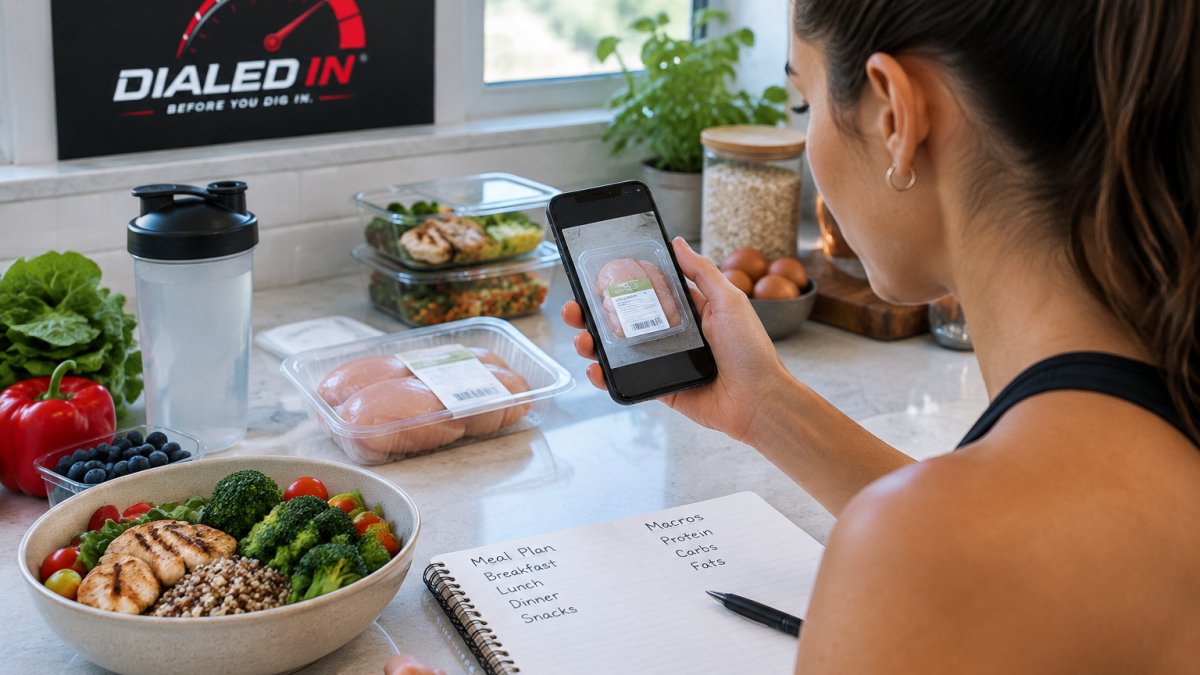
Tracking macros without an app is entirely possible, and some people prefer it. Paper and a pen remove the notifications, the streaks, and the guilt.
Start with a simple food diary. Write down what you ate, roughly how much, and which macro it mainly supplied. No weighing required at first.
- Use your hand as a portion guide: palm for protein, cupped hand for carbs, thumb for fat
- Build a short list of repeat meals and learn their macro counts once
- Read food labels for serving size and protein per serving
- Keep a running tally on paper or a whiteboard
That covers home meals. The harder problem is everything else. Here is how experienced paper trackers handle the real world:
Eating out. Pick the protein first, grilled chicken, fish, steak, eggs, beans, and estimate it against your palm. Restaurant portions of meat are often 6 to 8 ounces, roughly two palms, which is more protein than most beginners assume. Treat rice, pasta, and bread as one cupped hand per side, and assume cooked restaurant vegetables and sauces carry one to two thumbs of added fat. Log the estimate and move on; a 20% miss at one meal does not matter across a week.
Travel. Pack a mental shortlist of chain and convenience foods with known macros, a deli turkey sandwich, a protein bar, Greek yogurt, a banana, a rotisserie chicken. Log those exactly and estimate everything else.
Shared meals and potlucks. Serve yourself once, log what is on your plate using the hand guide, and do not go back for a second pass you did not log.
Label rounding and raw versus cooked weights. Food labels can legally round down, so a product with 0.4 grams of fat per serving can say zero. Weigh meat raw when the label gives raw weight and cooked when it gives cooked, the same chicken breast can differ by 25% or more between the two. These errors are small individually but compound across a week.
This approach trades precision for sustainability. For busy professionals who cannot stop to log every bite, a set of macro tracking habits for busy professionals can keep the system alive on chaotic days.
The trade-off is real. Paper tracking drifts over time, and portions get fuzzy.
Why Counting Macros Is Bad for Some People
Counting macros is bad for anyone with a history of disordered eating, obsessive food rules, or anxiety around numbers. For those readers, tracking can turn a healthy habit into a source of stress. That is not a character flaw. It is a signal to choose a different tool.
Warning signs worth taking seriously:
- Guilt or panic when you cannot log a meal
- Skipping social events to avoid untracked food
- Rigid rules that override hunger and fullness cues
- Constant mental math long after the app is closed
For these readers, a gentler approach works better. Focus on protein at each meal, vegetables at most meals, and consistent meal times. No numbers required. A guide on balancing macros without counting calories walks through that alternative.
Tracking is a tool, not a test of willpower. Anyone who finds it harmful should stop, and that decision deserves respect.
Start With One Meal Decision Today
The benefits of tracking macros for beginners come down to one thing: better decisions, made more often. You do not need a perfect plan. You need one meal where you choose protein first and let the rest follow.
Dialed In is a real-time AI food decision coach. Point your camera at a menu, a plate, or an open fridge, and the app gives a personalized recommendation based on your goal, whether that is losing fat, building muscle, or maintaining your weight.
If the logging grind is what stopped past attempts, a personalized AI meal planner overview shows what the alternative looks like in practice.
The hard part of nutrition was never knowing what to do. It is doing it at 7 p.m. in a restaurant with a menu in hand. Dialed In removes that friction with real-time AI food coaching, camera-based analysis of any menu or fridge item, and goal-specific recommendations that require no manual logging.
Frequently Asked Questions
Should I start tracking macros?
Tracking macros can help if you want to see how protein, carbs, and fat add up across a day and adjust portions accordingly. It suits people who like structure and are comfortable logging food for a few weeks. It is not the only path to a balanced diet, and it is not a good fit for anyone with a history of disordered eating. Try it for a short trial period, judge whether it reduces stress or adds it, and stop if it becomes obsessive.
How many macros should I eat a day for weight loss?
There is no single number that fits everyone. A common starting point is to set calories first, then aim for roughly 25 to 35 percent of calories from protein, 45 to 55 percent from carbohydrates, and 20 to 35 percent from fat. Protein needs are often set higher during fat loss to protect muscle mass. Use a macro diet calculator as a rough starting point, then adjust based on how you feel, your training, and how your weight and measurements change over three to four weeks.
Can I track macros without an app?
Yes. A paper notebook, a printed food label reference, and a kitchen scale cover the basics. Write down each meal, estimate the portion size, and look up protein, carbs, and fat per serving. It takes more time than an app, but it builds real awareness of portion size and nutrient density. Many people use a paper method for the first week to learn the numbers, then switch to a faster tool once they know roughly what their usual meals contain.
Why can counting macros be bad for some people?
Counting macros can feed obsessive thinking, guilt around food, and social isolation for people prone to disordered eating. It can also crowd out diet quality if someone hits their numbers with low-nutrient foods, and it adds daily friction for busy people who eat out often. If tracking makes you anxious, skip social meals, or feel like a failure when you miss a target, step back. A simpler approach focused on food choices and portion size may serve you better.