 blog
5 Ways AI Health Assistants Differ From Human Nutritionists
Last Updated: October 25, 2026
Quick Summary
An AI health assistant vs human nutritionist differs primarily in speed and scope. AI provides real-time meal recommendations and instant feedback, while registered dietitians offer clinical expertise, account for medical conditions and medications, and provide behavioral support for long-term strategy. Both can work together, with AI handling daily decisions and professionals managing complex medical situations.
- AI nutrition apps excel at identifying foods, calculating macronutrients, and matching meals to goals within seconds.
- Registered dietitians account for drug-nutrient interactions, medical conditions, and psychological factors that AI cannot address.
- Medical nutrition therapy for diabetes and kidney disease is covered by Medicare, and many commercial plans cover dietitian visits with qualifying diagnoses.
- Escalate to a professional if you have chronic conditions, take medications with food interactions, are pregnant, or have eating disorder history.
- Many people benefit from combining both: AI for daily meal decisions and a dietitian quarterly for strategy review and plan adjustments.
Table of Contents
- How AI Health Assistants and Human Nutritionists Approach Nutrition Differently
- AI Nutrition Coaching vs Registered Dietitian: Speed and Personalization
- AI-Generated Diet Plans vs Professional Nutritionist Recommendations
- What AI Nutrition Apps Can and Cannot Do
- Personalized Nutrition With AI: Real-Time Decisions vs Long-Term Strategy
- Safety, Accuracy, and When to Escalate to a Professional
- Choosing Your Nutrition Support: AI, Human, or Both
- Frequently Asked Questions
How AI Health Assistants and Human Nutritionists Approach Nutrition Differently
An AI health assistant vs human nutritionist represents a fundamental shift in how people make food decisions. Both pathways exist, but they operate from different starting points and solve different problems. Understanding where each excels, and where it falls short, determines which approach fits your actual needs.
The distinction isn't about one being universally better. It's about what each does well. AI nutrition coaching provides real-time, personalized recommendations. A registered dietitian brings clinical expertise, behavioral support, and the ability to adjust recommendations based on complex medical histories. Many people benefit from combining both, using AI for daily decisions and professional guidance for bigger nutrition strategy.
AI Nutrition Coaching vs Registered Dietitian: Speed and Personalization
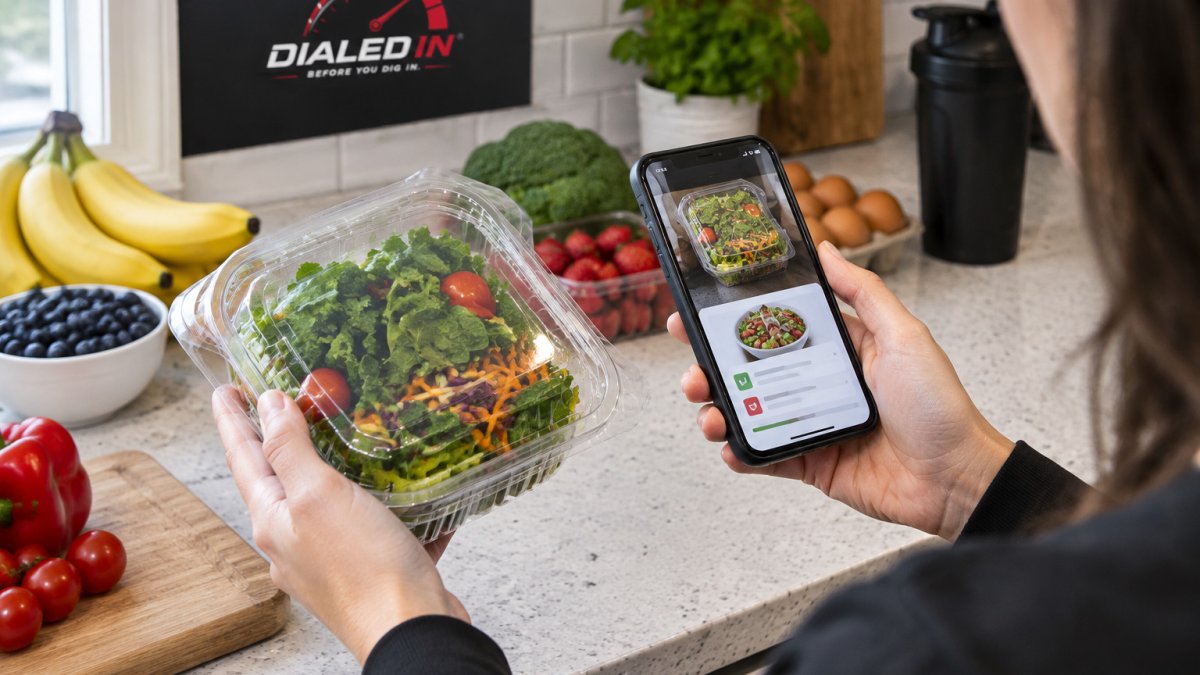
AI nutrition apps deliver instant feedback. Point your camera at a meal, and within seconds you get a recommendation aligned to your specific goals.
A registered dietitian works differently. The initial assessment takes time. You discuss your health history, current eating patterns, medical conditions, and goals. The dietitian then builds a comprehensive plan tailored to your situation.
The personalization difference is real but often misunderstood. AI personalization means your recommendations match your stated goals: lose fat, build muscle, or maintain weight. The system learns your preferences and adjusts suggestions accordingly.
Speed favors AI. Depth favors the human professional. For busy professionals eating out frequently, AI handles the immediate decision.
AI-Generated Diet Plans vs Professional Nutritionist Recommendations
AI systems generate meal plans by combining your goals with available data about foods, macronutrients, and calorie content. The output is consistent, fast, and based on the nutritional math.
A professional nutritionist creates plans that account for your actual life. Can you cook? Do you travel for work?
Here's where it gets interesting: adherence often matters more than perfect macronutrient ratios. A meal plan you stick to for three months beats a mathematically perfect plan you quit after one week.
Professional nutritionists also adjust recommendations based on how your body responds. If you're losing weight faster than expected, they modify calories. If you're not hitting your protein targets despite trying, they problem-solve with you.
What AI Nutrition Apps Can and Cannot Do
AI nutrition apps excel at specific, narrow tasks. They identify foods from images with reasonable accuracy. They calculate macronutrient content.
What they cannot do: diagnose medical conditions, account for complex drug-nutrient interactions, provide emotional support during difficult dietary changes, or adjust recommendations based on your medical test results.
This matters more than it might seem. Nutrition and medicine overlap. Someone with kidney disease needs different protein targets than someone building muscle.
The practical boundary: AI works for straightforward nutrition goals in people without complex medical situations. It breaks down when medical conditions enter the picture.
AI nutrition apps handle specific tasks well, but have clear boundaries where professional guidance becomes necessary.
| Capability | AI Nutrition Apps | Human Nutritionists |
|---|---|---|
| Identify foods from images | Yes | Not primary method |
| Calculate macronutrient content | Yes | Yes |
| Match meals to goals | Yes | Yes |
| Diagnose medical conditions | No | Yes |
| Account for drug-nutrient interactions | No | Yes |
| Provide emotional support | No | Yes |
| Adjust based on medical test results | No | Yes |
Personalized Nutrition With AI: Real-Time Decisions vs Long-Term Strategy
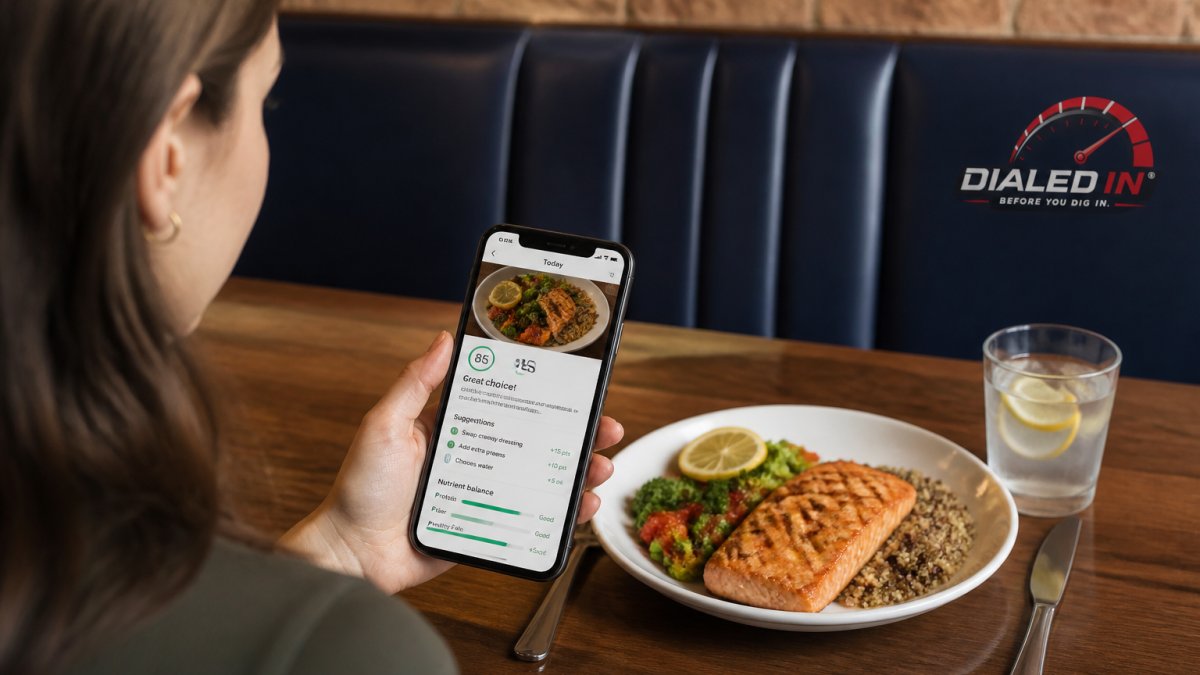
AI nutrition coaching shines at the decision point. You're at a restaurant, you open the app, you get a recommendation for this meal.
This real-time responsiveness is valuable for people who struggle with decision fatigue. Instead of agonizing over menu options, you get an instant answer.
Long-term strategy requires something different. Over months, your nutritional needs shift. Your goals might change. Your body composition changes, which changes your calorie and macro requirements.
AI tracks meal-by-meal decisions. Humans track month-by-month progress and adjust the bigger picture. Both matter. Real-time decisions get you through today.
For people focused on consistency without overthinking, AI handles the daily load well.
Safety, Accuracy, and When to Escalate to a Professional
AI nutrition apps have real limitations worth understanding, and the most important one is not accuracy, it's scope.
Accuracy matters more for some goals than others. If you're trying to lose fat and you're off by 100 calories per meal, that compounds over time. If you're trying to build muscle and you're underestimating protein, you might not hit your targets. For general health maintenance, small inaccuracies matter less. But accuracy is the smaller issue. The bigger issue is that an AI assistant is not a clinician, and some nutrition situations require one regardless of how good the app is.
Red flags that mean stop the app and call a professional
Treat the following as escalation triggers, not topics to crowdsource from an algorithm:
- Symptoms: unexplained weight loss or gain, persistent fatigue, frequent dizziness or fainting, swelling in the legs or face, changes in thirst or urination, hair loss, or digestive symptoms that persist for weeks. These can signal thyroid, kidney, liver, or metabolic problems that change nutrition targets entirely.
- Diagnoses: diabetes (especially type 1 or insulin-treated type 2), chronic kidney disease, heart failure, liver disease, gout, celiac disease, inflammatory bowel disease, food allergies, and any condition requiring a therapeutic diet. Protein, potassium, phosphorus, sodium, and fluid targets in these conditions are clinical prescriptions, not preferences.
- Medications: blood thinners such as warfarin (vitamin K consistency matters), potassium-sparing diuretics and ACE inhibitors (potassium intake), corticosteroids (blood sugar and bone health), and MAOIs (tyramine). Drug-nutrient interactions are a pharmacist and dietitian conversation, not an app recommendation.
- Eating-disorder concerns: any history of anorexia, bulimia, or binge-eating disorder, or current patterns of restriction, purging, compulsive tracking, or distress around food. Calorie-counting apps can reinforce disordered behavior, and a registered dietitian trained in eating-disorder care should guide the approach.
- Pregnancy and lactation, infancy, and older adulthood with frailty: nutrient needs shift in ways that generic goal-based recommendations don't capture.
What a responsible escalation path looks like
If any of the above applies, the practical sequence is: (1) talk to your primary care physician about whether a referral to a registered dietitian is appropriate; (2) verify the dietitian's credentials, look for "RD" or "RDN" and, for specialized care, board certification such as CSG (gerontological), CSR (renal), or CDCES (diabetes care and education); (3) ask whether the visit is covered, Medicare covers medical nutrition therapy for diabetes and kidney disease, and many commercial plans cover dietitian visits when a condition is diagnosed, though coverage and copays vary by plan. Find a registered dietitian is the Academy of Nutrition and Dietetics' public referral tool.
For people without medical complications trying to hit straightforward fitness goals, AI provides useful real-time support. For everyone else, professional guidance either replaces AI or works alongside it. The key is knowing which category you're in, and erring toward professional care when you're unsure.
Choosing Your Nutrition Support: AI, Human, or Both
The decision comes down to your specific situation, not abstract preferences. A useful way to structure it is a short decision tree keyed to your primary need, followed by an honest look at cost and access.
Decision framework by need
- General meal planning and everyday food decisions. If you want help choosing meals, estimating portions, and staying near a calorie or protein target without a medical condition, an AI health assistant is a reasonable primary tool. It is fast, low-cost, and removes decision fatigue.
- Chronic disease management (diabetes, kidney disease, heart disease, celiac, food allergies). Start with a registered dietitian, ideally one with relevant board certification. Medical nutrition therapy is individualized to lab values, medications, and comorbidities in ways an app cannot replicate. AI can help you execute the plan between visits.
- Sports nutrition and body composition. For recreational athletes and lifters, AI handles macro math and meal timing well. For competitive athletes, weight-class sports, or anyone with a history of disordered eating around body image, a sports dietitian (look for CSSD) adds value on periodization, fueling around training, and safe weight management.
- Behavior change and accountability. If your barrier is consistency, emotional eating, or breaking long-standing patterns, human coaching, a dietitian, health coach, or behavioral program, outperforms an app. AI can log and prompt, but accountability and motivational interviewing are human strengths.
- Combination. Many people do best using AI for daily decisions and a professional quarterly or as-needed for strategy, lab review, and plan adjustments.
Cost and access: what to expect
Costs vary widely by market and plan, so treat the following as typical ranges rather than quotes.
Access is the other half of the trade-off. AI is available immediately, at any hour, without a referral or waitlist.
Many people benefit from both. Use an AI health assistant for daily decisions and meal recommendations. Work with a dietitian periodically to review progress, adjust targets as your body changes, and solve problems you're hitting. This combination gives you real-time support plus strategic guidance.
Best Nutrition Coach App 2026: Top 7 Compared reviews the specific tools available if you're choosing an AI approach. Is Automated Nutrition Coaching Accurate? Facts provides detailed information on accuracy and limitations if you're evaluating whether AI nutrition coaching fits your needs.
The real answer: neither approach is universally best. The best approach is the one that matches your needs, your medical situation, your budget, and your behavioral preferences. AI excels at removing friction from daily decisions.
Frequently Asked Questions
Can an AI health assistant replace a human nutritionist?
No. An AI health assistant excels at instant meal analysis and macro tracking, but cannot diagnose medical conditions, manage complex medication interactions, or provide the behavioral accountability that drives long-term adherence. For routine decisions and restaurant meals, AI is faster. For chronic disease management, eating disorders, or clinical nutrition needs, a registered dietitian is essential. Many people benefit from both: AI for daily decisions, a nutritionist for strategy.
What can a nutritionist do that an AI health assistant cannot?
Registered dietitians assess your full medical history, identify nutrient deficiencies, adjust plans for medications and conditions, and diagnose eating disorders. They provide emotional support, accountability, and behavior change coaching, factors that drive real results. AI apps cannot assess clinical complexity, adapt to evolving health needs, or offer the human connection that motivates consistency over months and years.
When should I consult a registered dietitian instead of using an AI nutrition app?
Seek a dietitian if you have diabetes, heart disease, kidney disease, food allergies, an eating disorder, pregnancy-related nutrition needs, or are taking medications that interact with nutrients. Also consult a dietitian if you've struggled with diet adherence, need behavior change support, or want a personalized long-term strategy. AI nutrition apps work best for healthy individuals making routine meal choices and tracking macros for fitness goals.
Are AI-generated diet plans safe for people with medical conditions?
AI nutrition apps are not designed for medical nutrition therapy and should not replace professional guidance for chronic disease. They lack access to your full medical history, medication list, and lab results, critical data that determines safe nutrition recommendations. If you have a medical condition, work with a registered dietitian first to establish a safe framework, then use AI tools for day-to-day meal decisions within that plan.