 Listicle
High Protein Meal Prep Ideas: Build Muscle Without Tracking
Last Updated: November 2, 2026
Quick Summary
High protein meal prep means batch-cooking lean proteins and complex carbs ahead so each meal hits a protein target without daily logging. Most lifters aim for 1.6 to 2.2 grams of protein per kilogram of bodyweight daily, spread across three to five meals at roughly 30 to 50 grams of protein each.
- Multiply your weight in pounds by 0.7 to 1.0 to get a daily protein range in grams.
- Four meals at 35 to 45 grams each covers a 180-pound lifter's daily range comfortably.
- For muscle gain, add 200 to 300 calories above maintenance while holding protein high.
- Cook proteins and grains on Sunday, then refresh vegetables midweek in a second session.
- Keep protein fixed at 35 to 50 grams per meal and adjust the starch scoop for your goal.
Table of Contents
- How Much Protein You Actually Need Per Meal to Build Muscle
- High-Protein Meal Prep Recipes for Breakfast, Lunch and Dinner
- Lean Proteins and Complex Carbs to Batch Cook Every Week
- Your 7-Day Meal Prep for Muscle Gain: Day-by-Day Plan
- High-Protein Meals for Muscle Gain and Fat Loss in the Same Week
- 7-Day High-Protein Meal Prep: Shopping List, Storage and Reheating
- Check Your Prep Against Your Goal With Dialed In
- Frequently Asked Questions
How Much Protein You Actually Need Per Meal to Build Muscle
The most common mistake in high protein meal prep ideas for muscle building is not picking the wrong foods.
High protein meal prep is the practice of batch-cooking lean proteins and complex carbs ahead of time so each meal hits a protein target without daily logging.
That spread matters more than the total for many people. For a deeper guide on hitting your daily protein goal, see the full breakdown.
Setting Your Daily Protein and Calorie Targets
Start with bodyweight, not apps. Multiply your weight in pounds by 0.7 to 1.0 to get a daily protein range in grams. A 180-pound lifter lands between 126 and 180 grams per day.
Then split it. Four meals at 35 to 45 grams each covers that range comfortably. For muscle gain, add 200 to 300 calories above maintenance; for recomposition, eat near maintenance with protein held high.
Portion Scaling for Your Body Size and Training Goal
Portions are not one-size. Scale protein first, then carbs, then fats.
| Goal | Protein per Meal | Carbs per Meal | Best For |
|---|---|---|---|
| Fat loss | 35-45 g | 30-40 g | Smaller lifters, cutting phases |
| Recomposition | 35-45 g | 40-55 g | Maintenance calories, mixed goals |
| Muscle gain | 40-55 g | 55-75 g | Hard gainers, heavy training blocks |
Larger athletes and those training twice daily should sit at the top of each range.
High-Protein Meal Prep Recipes for Breakfast, Lunch and Dinner
Breakfast is where most muscle-building plans collapse. Fix it first, and the rest of the day gets easier. These high-protein meal prep recipes cover all three meals, reheat well, and each one is built to land in the 30 to 50 gram protein range per serving so you can match it to the per-meal targets above. Nutrition figures below are estimates for a single serving and will shift with brand, cut of meat, and portion size.
Breakfast: Greek Yogurt Bowls, Egg Wraps and Protein Pancakes
Three breakfasts rotate well across a week:
- Greek yogurt bowl: 1 cup (about 225 g) plain Greek yogurt, 1/2 cup berries, 1/4 cup rolled oats, 1 teaspoon honey. Roughly 25 g protein and 300 calories before add-ins. Stir in a half scoop of whey or a tablespoon of chia to push protein past 30 g.
- Egg wrap: three whole eggs scrambled into a whole wheat tortilla with a handful of spinach and 2 oz sliced turkey. Roughly 30 g protein and 400 calories. Use two whole eggs plus two egg whites to cut fat without losing protein.
- Protein pancakes: blend 1/2 cup oats, 1/2 cup cottage cheese, two eggs, and one scoop whey, then batch-cook and freeze. A three-pancake serving lands near 30 g protein and 350 calories.
Cook pancakes and wraps on Sunday, store in the fridge, and reheat in a skillet. Watch out: reheated eggs turn rubbery in a microwave, so use a low setting and short bursts, or reheat in a covered skillet over medium-low heat.
Lunch and Dinner: Protein Bowls, Meatballs and One-Pan Trays
Build lunches as bowls: a protein, a grain, roasted vegetables, and a sauce. Each bowl below is sized for one serving at roughly 40 g protein and 500 to 600 calories.
- Chicken and rice bowl: 6 oz cooked chicken breast, 1 cup cooked jasmine rice, 1 cup broccoli, 2 tablespoons teriyaki-style sauce. About 45 g protein.
- Beef and quinoa bowl: 5 oz cooked 90% lean ground beef, 3/4 cup cooked quinoa, 1 cup peppers and onions. About 40 g protein.
- Tuna and sweet potato bowl: one 5 oz can tuna in water, 1 medium roasted sweet potato, 1 cup green beans, lemon and olive oil. About 35 g protein.
Turkey meatballs and sausage pasta trays handle dinner. Brown the meatballs, simmer in tomato sauce, and portion over pasta or couscous; four meatballs plus 1 cup pasta and sauce is roughly 40 g protein.
A practical guide on preparing high-protein meals for muscle gain walks through the cooking methods in more detail.
Scaling Each Recipe to Your Goal
Use the same recipes for a surplus, maintenance, or fat loss by changing the starch and fat, not the protein. For muscle gain, add 1/2 cup cooked rice or an extra tortilla and a tablespoon of olive oil per meal, which adds roughly 150 to 200 calories. For fat loss, keep the protein portion fixed, halve the grain, and double the non-starchy vegetables.
Dietary and Allergen Swaps
Every recipe above has a working substitute. For dairy-free, replace Greek yogurt with a fortified coconut or soy yogurt and cottage cheese with silken tofu in the pancakes. For gluten-free, use corn tortillas and certified gluten-free oats. For vegetarian or vegan, swap chicken and beef for extra-firm tofu, tempeh, or a 50/50 blend of lentils and brown rice, and use a plant-based protein powder in the pancakes.
Lean Proteins and Complex Carbs to Batch Cook Every Week
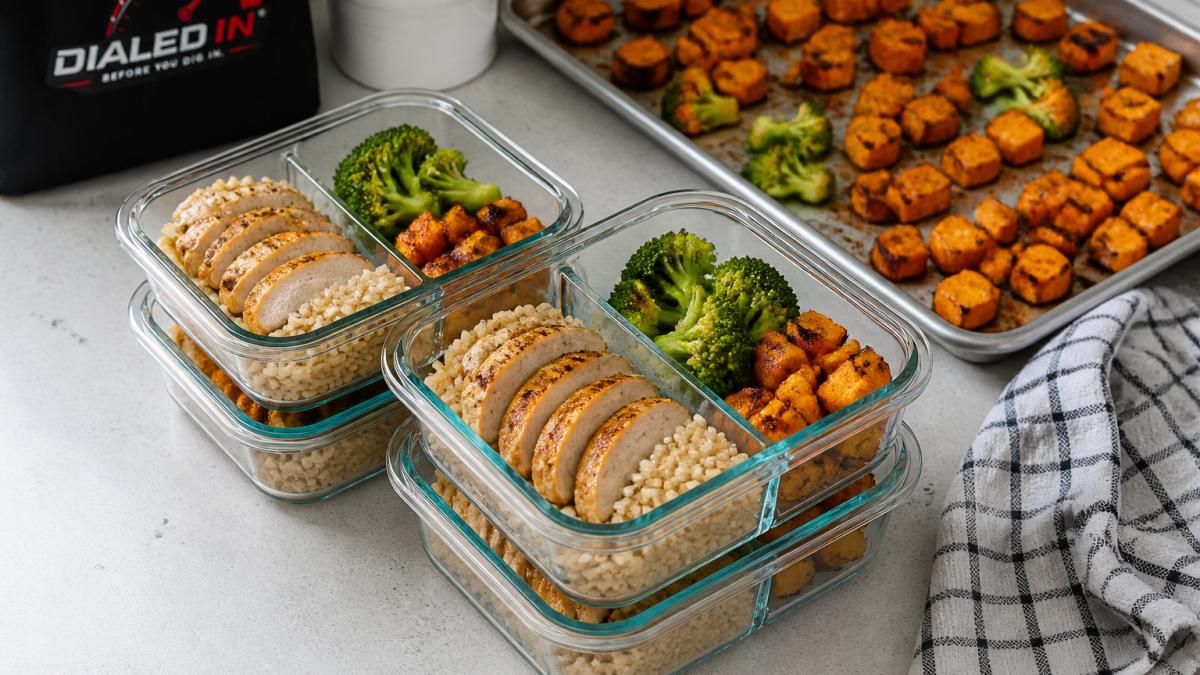
Sunday cooking should produce components, not finished meals. Components stay flexible; finished meals get boring by Thursday.
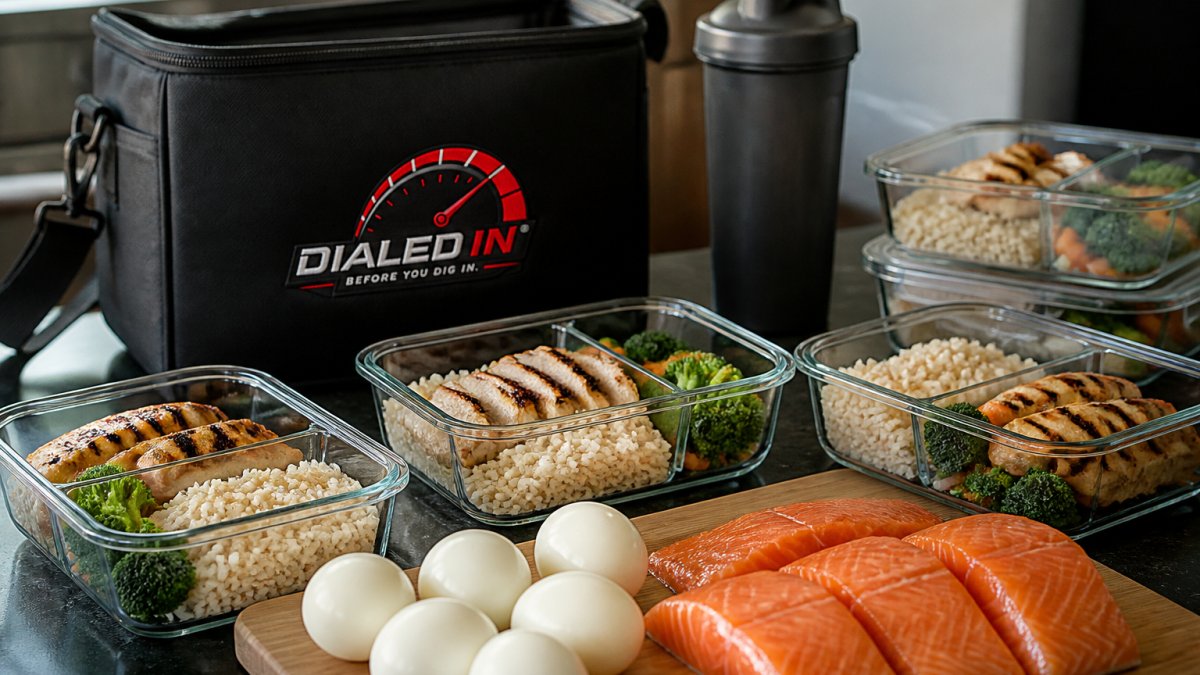
Batch-cook these proteins: chicken breast, turkey, lean beef, salmon, tuna, eggs, tofu, and cottage cheese as a no-cook backup.
Pair them with complex carbohydrates: brown rice, jasmine rice, quinoa, couscous, sweet potatoes, and oats.
Buying in bulk keeps costs down. A high-protein grocery list covers the specific foods worth stocking weekly.
Your 7-Day Meal Prep for Muscle Gain: Day-by-Day Plan
A 7-day meal prep for muscle gain works best when two cooking sessions cover the week. Cook proteins and grains on Sunday, then refresh vegetables midweek.
- Monday: Greek yogurt bowl; chicken and rice bowl; turkey meatballs with pasta
- Tuesday: Egg wrap; seasoned beef and quinoa; salmon with sweet potatoes
- Wednesday: Protein pancakes; tuna and couscous bowl; chicken fajita tray
Rotate the same five or six meals rather than chasing variety. Repetition is what makes prep sustainable.
High-Protein Meals for Muscle Gain and Fat Loss in the Same Week
Muscle gain and fat loss do not need separate menus. The same base meals work for both goals; only the carb portion and total calories change.
High-protein meals for muscle gain and fat loss share one rule: protein stays fixed, carbs flex. On training days, add rice, oats, or an extra tortilla.
This is where portion discipline beats willpower. Keep protein constant at 35 to 50 grams per meal and adjust the starch scoop.
7-Day High-Protein Meal Prep: Shopping List, Storage and Reheating
A 7-day high-protein meal prep fails on food safety more often than on flavor. Cooked chicken, rice, and eggs all have short fridge lives, so label everything with the day it was cooked and plan which days rely on the freezer instead of the fridge.
Shopping List for the Week
A week of the meals above comes down to a short, repeatable list. Buy proteins in family packs and freeze what you will not cook in the first three days.
- Proteins: chicken breast or thighs, 90% lean ground beef, turkey, salmon or canned tuna, eggs, Greek yogurt, cottage cheese, tofu
- Carbohydrates: jasmine or brown rice, quinoa, couscous, sweet potatoes, rolled oats, whole wheat tortillas, pasta
- Produce: broccoli, peppers, onions, spinach, green beans, berries, lemons
Storage Timelines That Actually Hold
Cool cooked food within two hours of cooking, then refrigerate in shallow containers so it chills fast. These are the windows to work within:
- Cooked chicken, beef, and turkey: three to four days in the refrigerator
- Cooked rice and grains: three to four days; freeze portions you will eat after day four
- Cooked eggs and egg wraps: three to four days
The USDA Food Safety and Inspection Service publishes storage timelines for cooked meats and leftovers if you want the official reference.
Reheating Without Ruining Texture
Reheat chicken and rice bowls covered with a splash of water so the grain steams instead of drying. Reheat meatballs in sauce on the stovetop rather than the microwave. Watch out: rice left at room temperature for more than two hours should be discarded, not reheated, because the risk comes from how it was held, not how it is warmed.
Budget Swaps and Allergen Alternatives
Cheaper proteins do the same job: eggs, cottage cheese, canned tuna, and chicken thighs cost less per gram of protein than breast or salmon, and frozen vegetables match fresh nutritionally while cutting waste.
For allergens, swap Greek yogurt for a dairy-free alternative, use gluten-free tortillas and certified gluten-free oats, and replace whey with a plant-based protein powder. A guide to healthy groceries on a budget covers swaps in more depth.
Check Your Prep Against Your Goal With Dialed In
Prep gets you 80% of the way. The other 20% is the meals you did not plan: the restaurant lunch, the fridge raid at 9pm, the gas station stop.
Dialed In is a real-time AI food decision coach.
For anyone running high protein meal prep who still eats out several times a week, that matters. If macro tracking has never stuck, a guide on building muscle without tracking macros explains why.
Dialed In offers:
- Personalized recommendations tailored to your muscle-building goal
- Works on any menu, meal, or refrigerator item
- No manual calorie logging required
Frequently Asked Questions
How much protein should I eat each day to build muscle?
Most people building muscle do well in the range of 0.7 to 1 gram of protein per pound of body weight per day, split across three to five meals. For a 180-pound lifter, that is roughly 126 to 180 grams daily. Spreading it out matters as much as the total: aim for 30 to 50 grams per meal so each sitting gives your muscles a meaningful signal. High protein meal prep makes hitting that number easier because the portions are already measured before hunger and time pressure take over.
What is the 3-3-3 rule for meal prep?
The 3-3-3 rule is a simple planning shortcut: three meals prepped at a time, three days of food in the fridge at once, and three protein sources rotated through the week. It keeps food fresh, limits boredom, and stops you from cooking one giant batch you throw out on day five. Pair it with a 7-day high-protein meal prep plan and you can cook twice a week instead of every night, while still hitting your protein target consistently.
How many days can meal-prepped food stay fresh in the fridge?
Cooked chicken, turkey, lean beef and fish keep for three to four days in a refrigerator held at 40°F or below. Cooked rice, quinoa and pasta are also best within three to four days. Keep anything you will not eat by day four in the freezer instead, and reheat to 165°F before eating. Label containers with the prep date, and cool food before sealing so condensation does not speed spoilage.
Can you build muscle while losing fat with high-protein meal prep?
Yes, especially if you are new to lifting or carrying extra body fat. The keys are keeping protein high, holding a small calorie deficit rather than an aggressive one, and continuing to train hard. High-protein meals for muscle gain and fat loss look similar: lean protein, vegetables, and controlled portions of rice, quinoa or sweet potatoes. Dialed In helps here because it reads a menu or fridge shelf and points you to the option that fits your current goal, whether that is a surplus or a deficit.
Is 200 grams of protein a day too much for muscle gain?
For most people, 200 grams is more than needed and not harmful, but it is rarely necessary. Research supports roughly 0.7 to 1 gram per pound of body weight for muscle building, so a 200-pound lifter sits near the top of that range. The bigger issue is what the protein displaces: if chasing 200 grams crowds out carbohydrates and vegetables, training quality drops. Build meals around lean protein, complex carbohydrates and produce, and let the total land where your body weight puts it.
The hard part of muscle building is not knowing which foods are high in protein. It is making the right call when you are hungry, rushed, and staring at a menu that was not part of the plan. Dialed In closes that gap with real-time coaching on any food source, personalized to your goal, with no logging required. Get started with Dialed In and turn every meal decision into progress toward the physique you are training for.